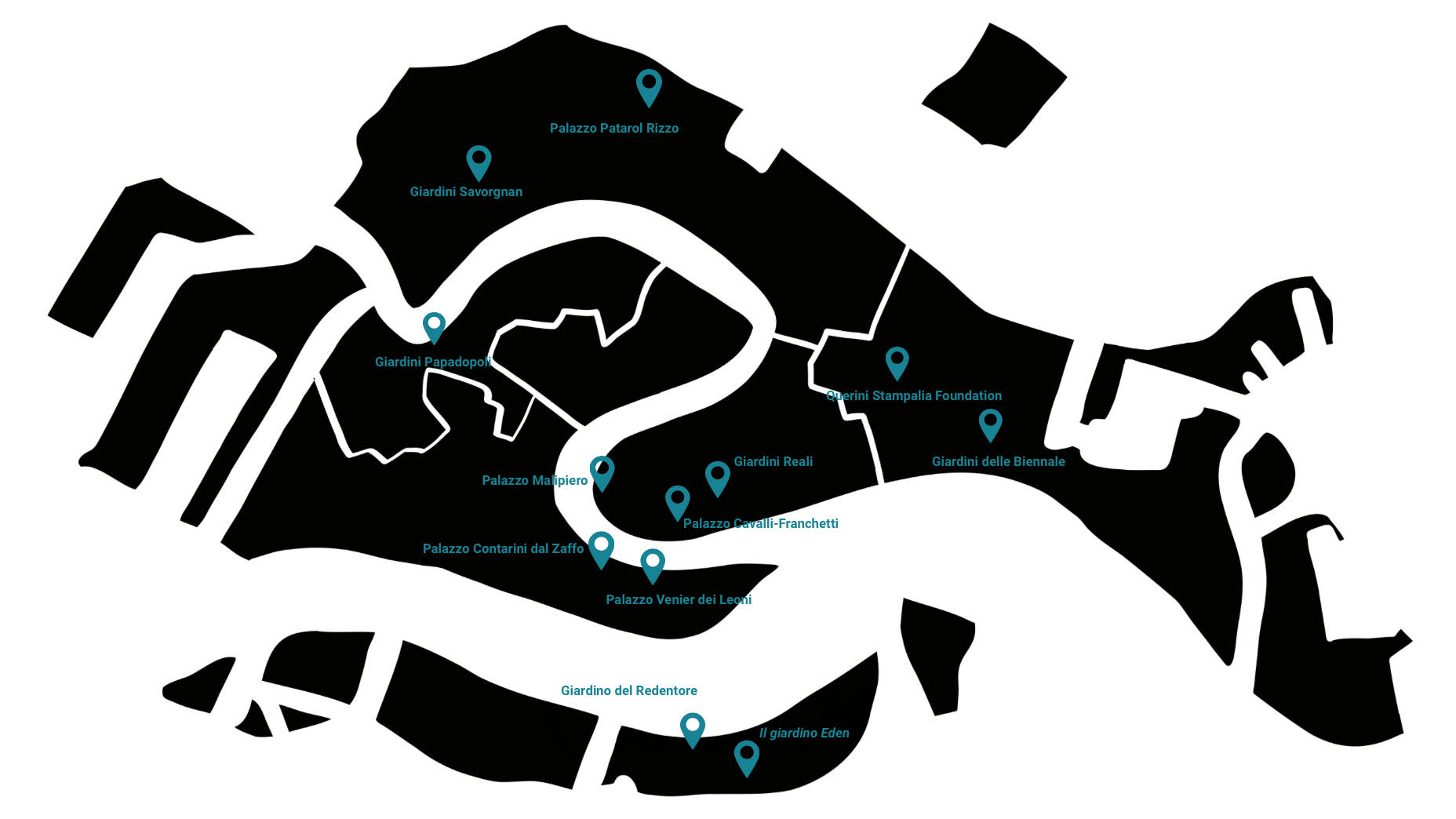
When people think of Venice, they imagine canals, bridges, and marble facades. But hidden behind stone walls and along quiet alleyways are lush gardens full of history, beauty, and silence.
In this article, we take you on a journey through Venice’s public and private gardens: from romantic parks like Giardini Papadopoli to the secluded elegance of noble residences such as Palazzo Patarol Rizzo. You’ll discover spaces where time slows, flowers bloom in unexpected corners, leaves change their colours, and the true spirit of Venice—quiet, mysterious, and alive—continues to grow.
Venetian Palace Gardens
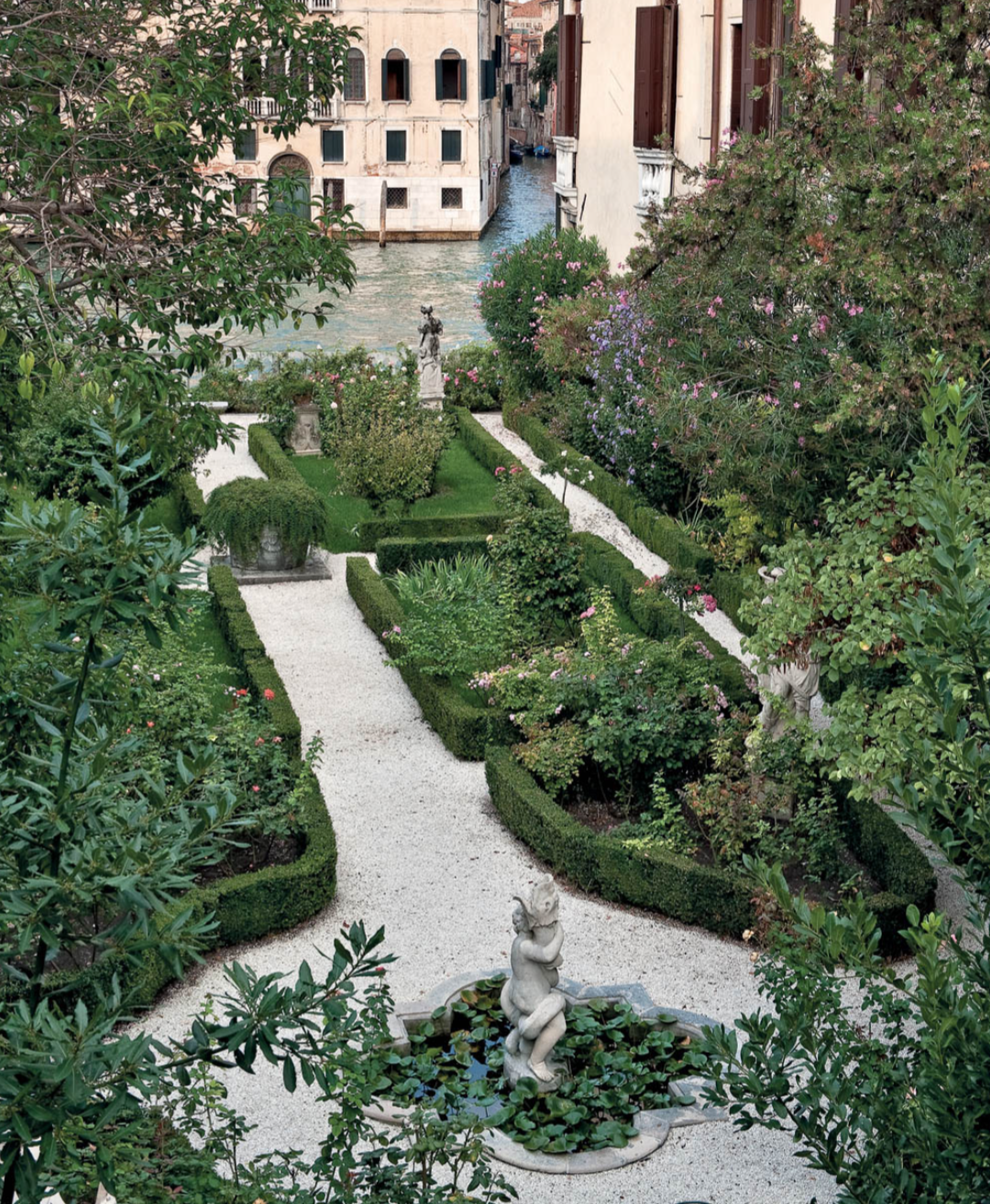
Behind the facades of many Venetian palaces lies a secret world: long, narrow gardens enclosed by walls, often accessible through a loggia or gate marked by statues. These gardens were shaped by boxwood hedges, pergolas, and shaded groves of tall trees—sometimes leading to a second entrance from the water or a small pavilion.
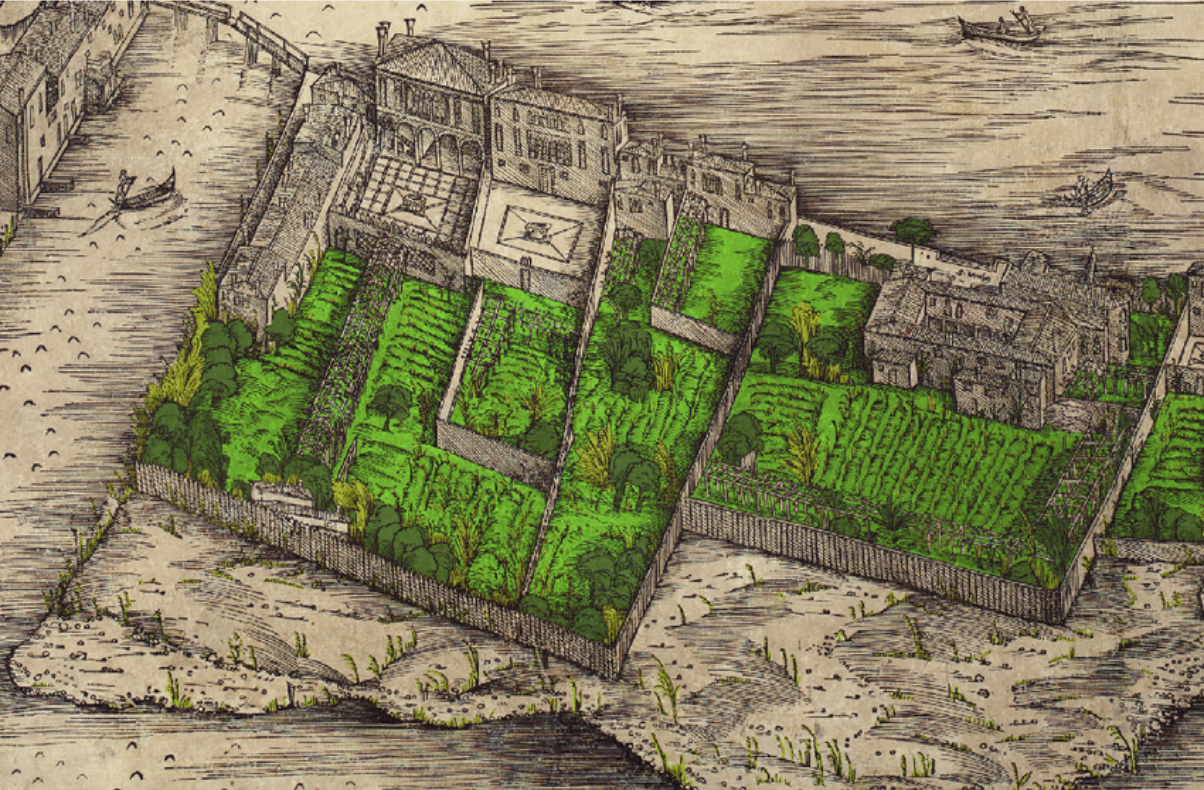
This garden style, clearly seen in 16th-century Giudecca, became the model for most palace gardens in Venice. Even in the dense heart of the city, Venetians carved out private green spaces—quiet, beautiful retreats cherished despite challenges like flooding and lack of sunlight.
Frederic Eden’s Dream on Giudecca
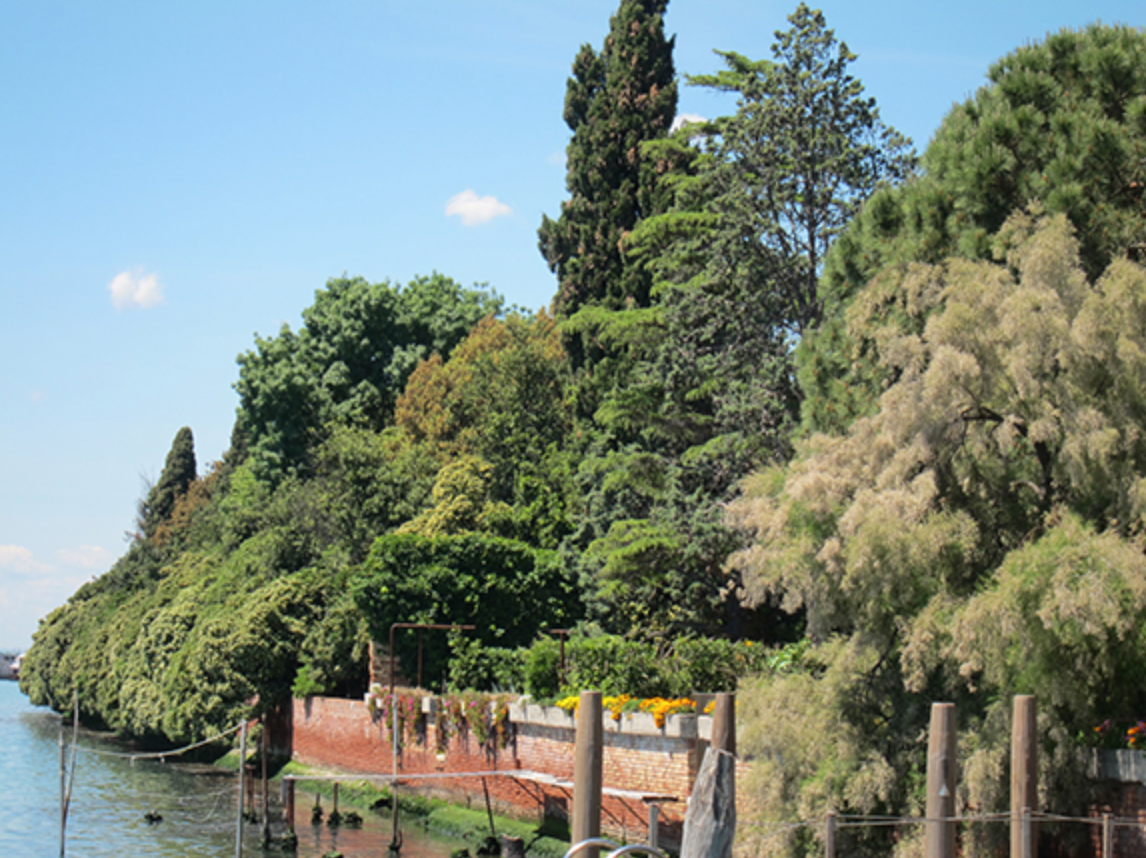
The most remarkable 19th-century garden was created by Frederic Eden on Giudecca island. With advice from famed English garden designer Gertrude Jekyll, he transformed an old artichoke field into a poetic mix of English and Venetian traditions.
Eden’s garden featured white lilies under long pergolas, citrus trees in terracotta pots, a rose-framed pool, and a sunlit path along the lagoon scented with pittosporum. It was a place of beauty and memory—Venice’s own version of an English dream.
After Mr. Eden's death in 1916, the garden and villa were passed to Princess Aspasia of Greece in 1927. She enriched the garden further by adding Mediterranean botanical species. In 1919, Aspasia married Crown Prince Alexander of Greece, who tragically died a year later after being bitten by a monkey. Their only daughter, Princess Alessandra, later married Peter II, the last King of Serbia, in 1945.
Aspasia lived in the Palace and Garden of Eden until her death in 1972. Afterward, the property was bought by Friedensreich Hundertwasser, an Austrian artist and architect. He cared for the garden in his own unique way, believing that "we must not do gardening, but let nature take its course."
Secret Garden of the Redentore
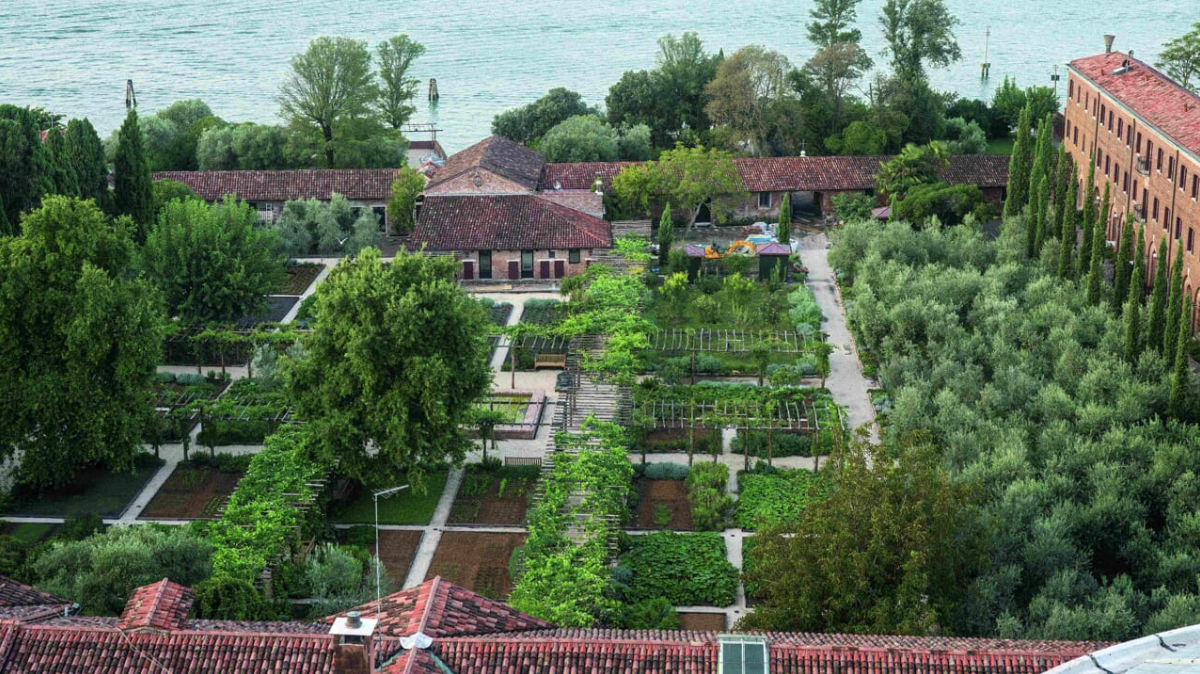
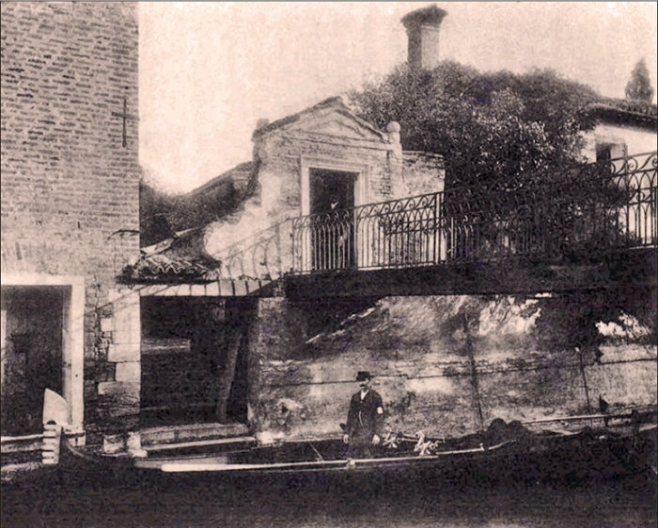
Tucked away on Isola della Giudecca, behind the majestic Chiesa del Santissimo Redentore designed by Andrea Palladio, lies a hidden gem: the Orto Giardino. Created after the plague of 1575–1577 and entrusted to the Cappuccini by Papa Gregorio XIII, this peaceful space stretches from the Canale della Giudecca all the way to the Laguna.
Wounded by time and the dramatic acqua granda of 2019, the garden got a second life in 2021 when it was entrusted—with approval from the Santa Sede—to the Venice Gardens Foundation, led by Adele Re Rebaudengo.
Now fully restored thanks to landscape legend Paolo Pejrone, the garden is alive again. You'll follow cross-shaped paths shaded by chestnut-wood pergolas wrapped in climbing roses, wisteria, and trumpet vines. Among tall cypress trees, the garden opens into a tapestry of spaces: the olive grove, the orchard, and cultivated beds filled with herbs, vegetables, and medicinal plants, all selected from traditional Mediterranean species.
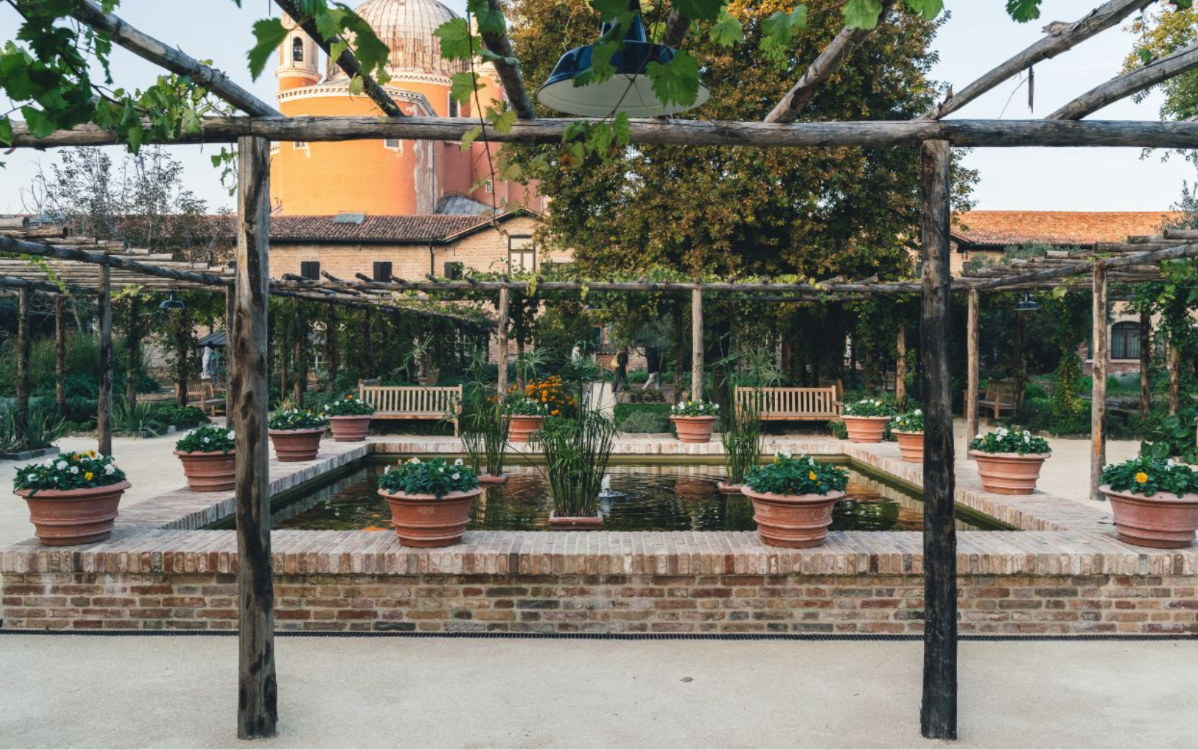
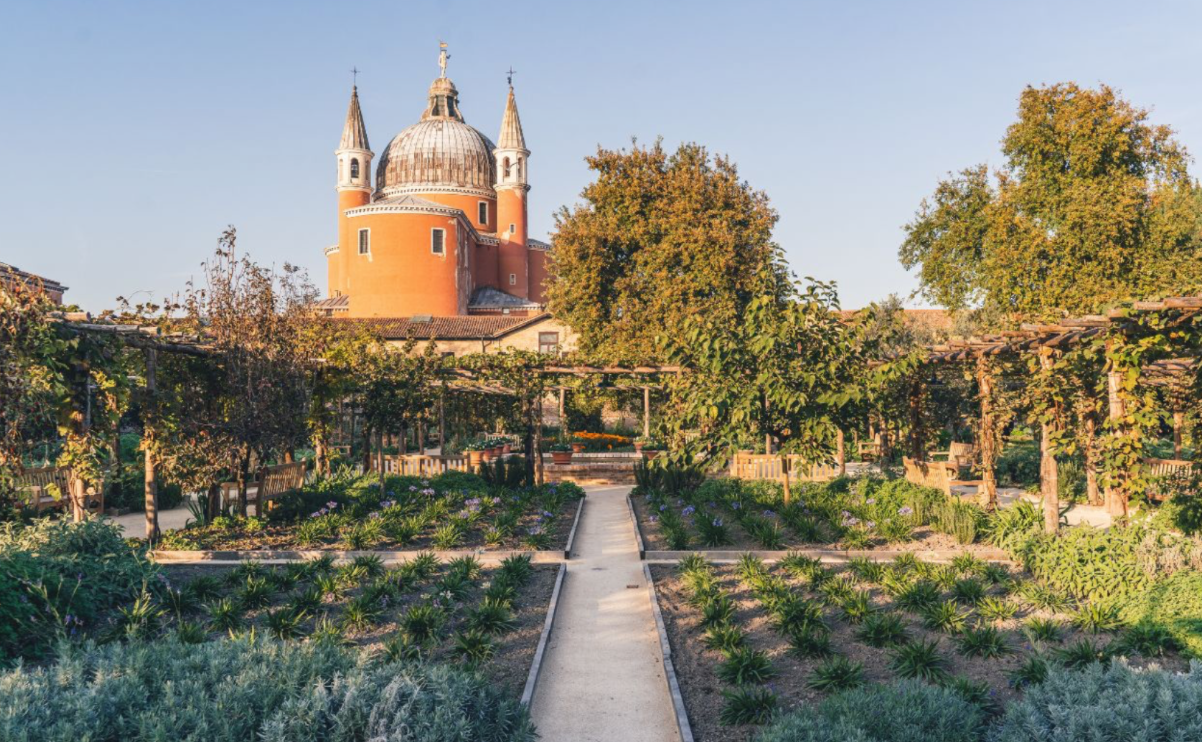
At the center lies the tranquil Water Lily Pool, the symbolic heart of the garden. Toward the Lagoon, the peaceful Pittosporum Garden awaits—its evergreen foliage and ivy leading to a pergola adorned with Banksia roses (‘Alba plena’), offering visitors a perfect spot to watch the sunset over Venice.
A New Garden Aesthetic in the 19th Century
In the 1800s, Venice embraced the romantic, informal garden style sweeping through Europe. One early example was the The Gardens of Castello designed by Giannantonio Selva beyond today's Via Garibaldi, featuring winding paths and a tree-covered belvedere.
Giardini della Biennale: Where Art Meets Green
Overlooking the San Marco lagoon basin, the Giardini di Castello is the largest public park in the historic center of Venice, spanning 65,000 square meters and hosting hundreds of plant species, both native and exotic. Their creation dates back to the Napoleonic era, between 1808 and 1812, when marshland and parts of a working-class district—including several churches and convents—were cleared to build a public park for the city.

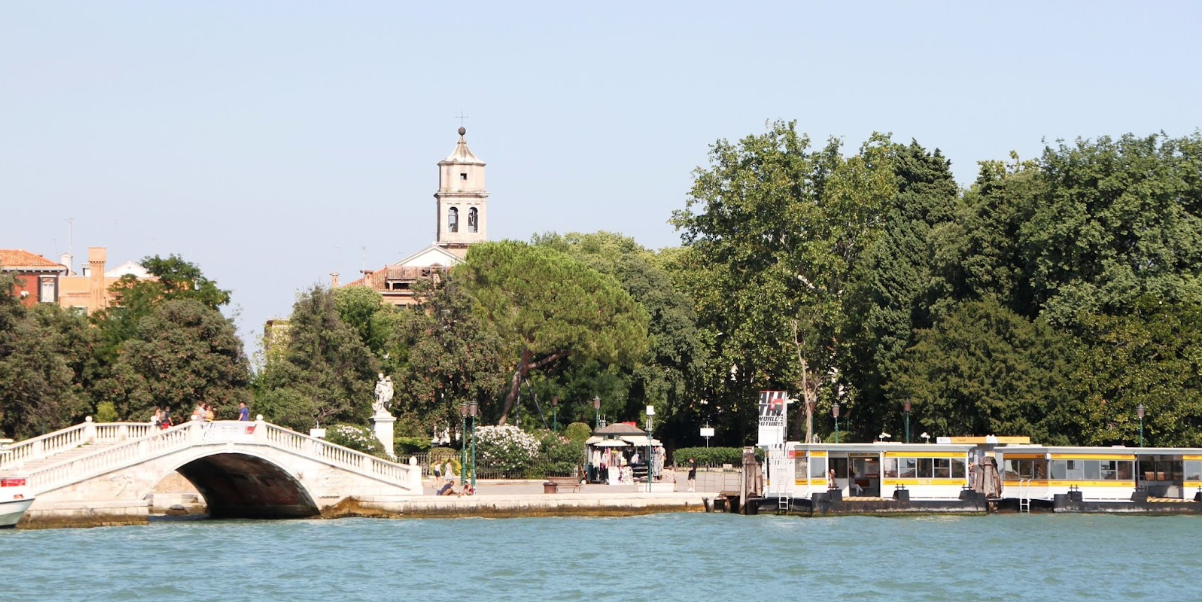
Today, the Giardini are home to the Venice Biennale, occupying about two-thirds of the exhibition area. Monumental trees and shaded paths continue to offer Venetians and visitors a quiet escape, echoing Napoleon’s vision of urban renewal through nature.
Papadopoli Garden
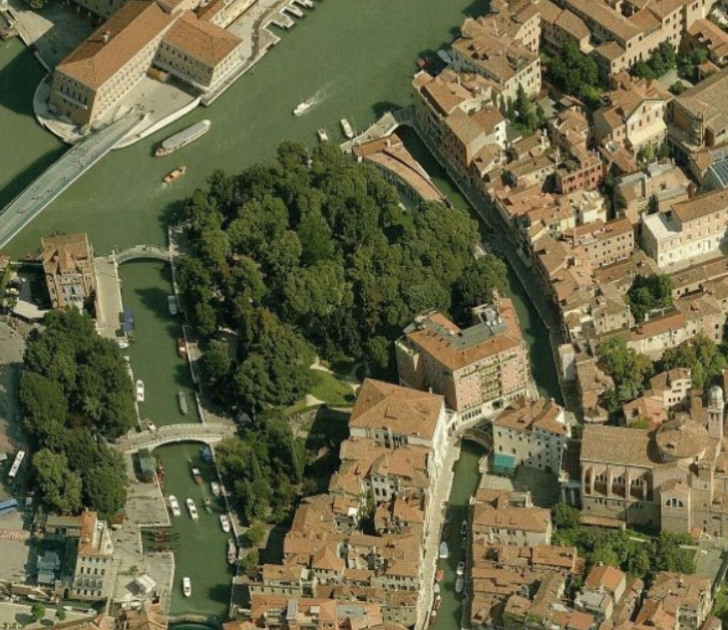
Just steps from Piazzale Roma, Giardini Papadopoli is one of Venice’s few public parks—a quiet corner of greenery nestled between canals and traffic routes.
Created in the 1830s on the ruins of an old monastery, the garden was designed in romantic English style with winding paths, gentle hills, and exotic plants. Once home to aviaries and grand terraces overlooking the Grand Canal, it was a favorite of 19th-century Venetians.
Though altered over time—especially with the construction of Piazzale Roma—the garden still offers a peaceful escape at the edge of the city’s historic heart.
The Secret Garden of Palazzo Patarol Rizzo
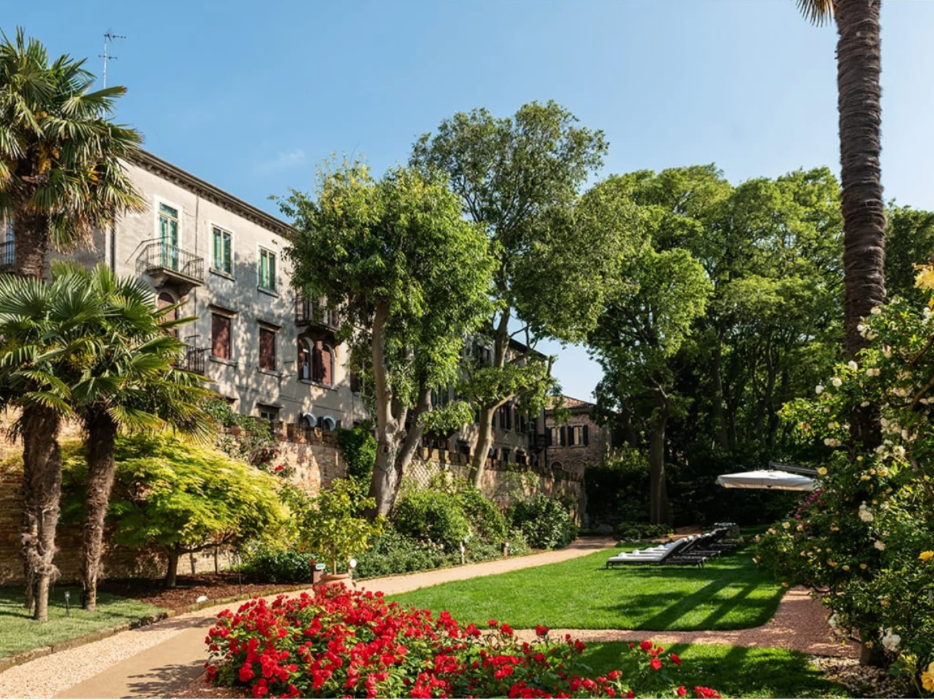
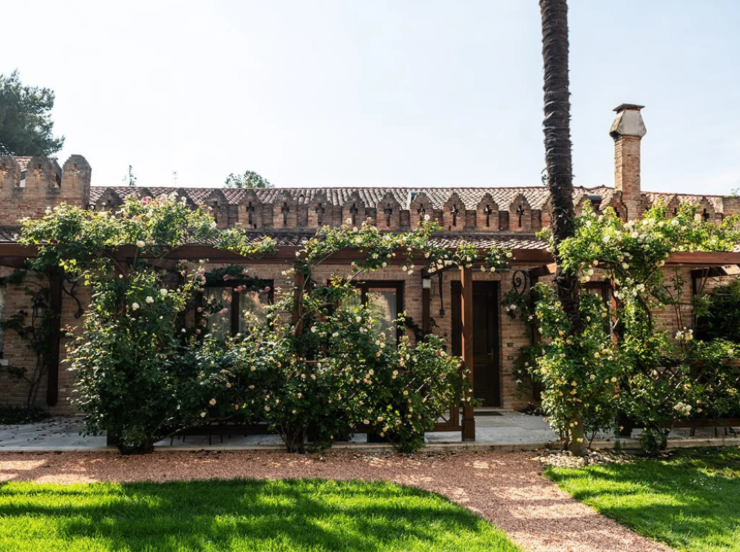
Surrounded by artisan workshops, bacari, and historic trades like gondola-making and lace weaving, the garden is a wonder in every season. Winding paths lead through an enchanting landscape of grottos, fountains, faux ruins, and vibrant blooms—offering a glimpse into a more intimate, magical Venice.
Tucked away in the authentic heart of Cannaregio—where true Venetians still live and work—lies Palazzo Patarol Rizzo, now home to the Grand Hotel dei Dogi. This noble residence, with its classic Venetian architecture, is set within a lush 2,000 m² botanical garden—a rare jewel in the city.
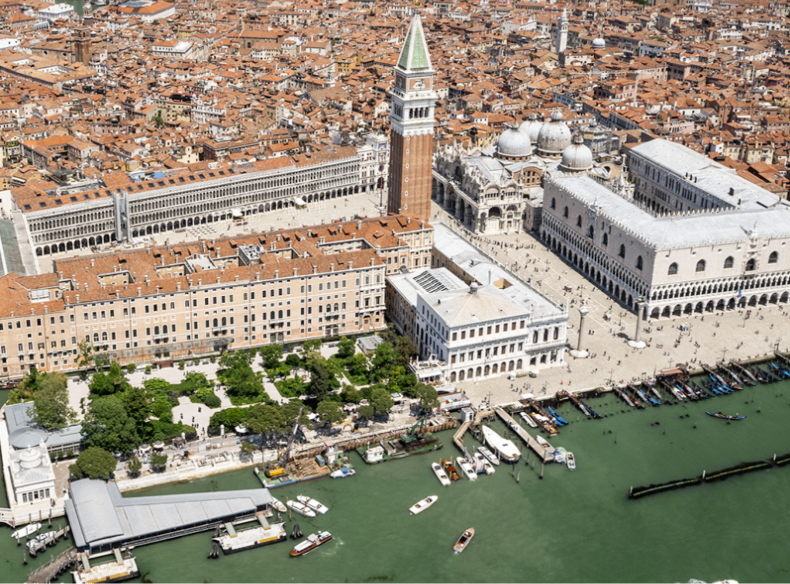
The Royal Gardens: A Green Jewel Behind Piazza San Marco
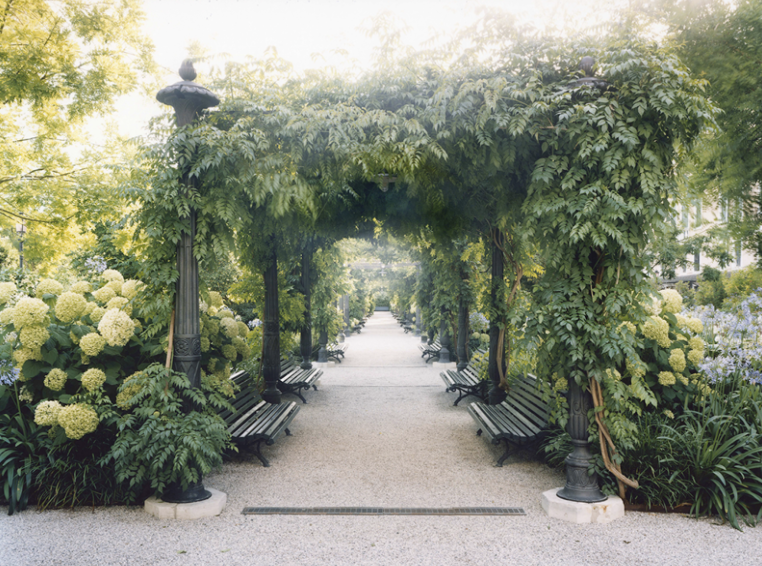
Tucked just behind Piazza San Marco and linked by a small drawbridge, the Royal Gardens of Venice are a restored haven of beauty and calm. Commissioned by Napoleon in 1807 as part of his redesign of the Marciana Area, the gardens later became a private retreat for Empress Elisabeth of Austria—Princess Sissi—who was so fond of walking there that public access was suspended during her visits.
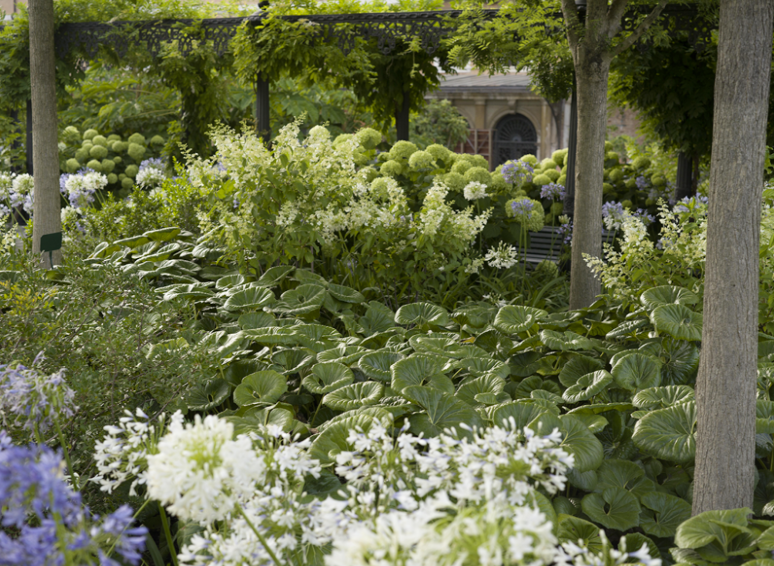
After years of neglect, they were reopened in 2019 by the Venice Gardens Foundation, led by Adele Re Rebaudengo and supported by Assicurazioni Generali. Landscape architect Paolo Pejrone preserved the formal 19th-century layout while enriching it with lush plantings: wisteria-covered pergolas, groves of Tetrapanax, thousands of Agapanthus, and fruit trees along the canal. Today, with the elegant Greenhouse and Café Pavilion at its heart, the Royal Gardens are once again a peaceful botanical jewel in the heart of Venice.
The Garden of Palazzo Malipiero
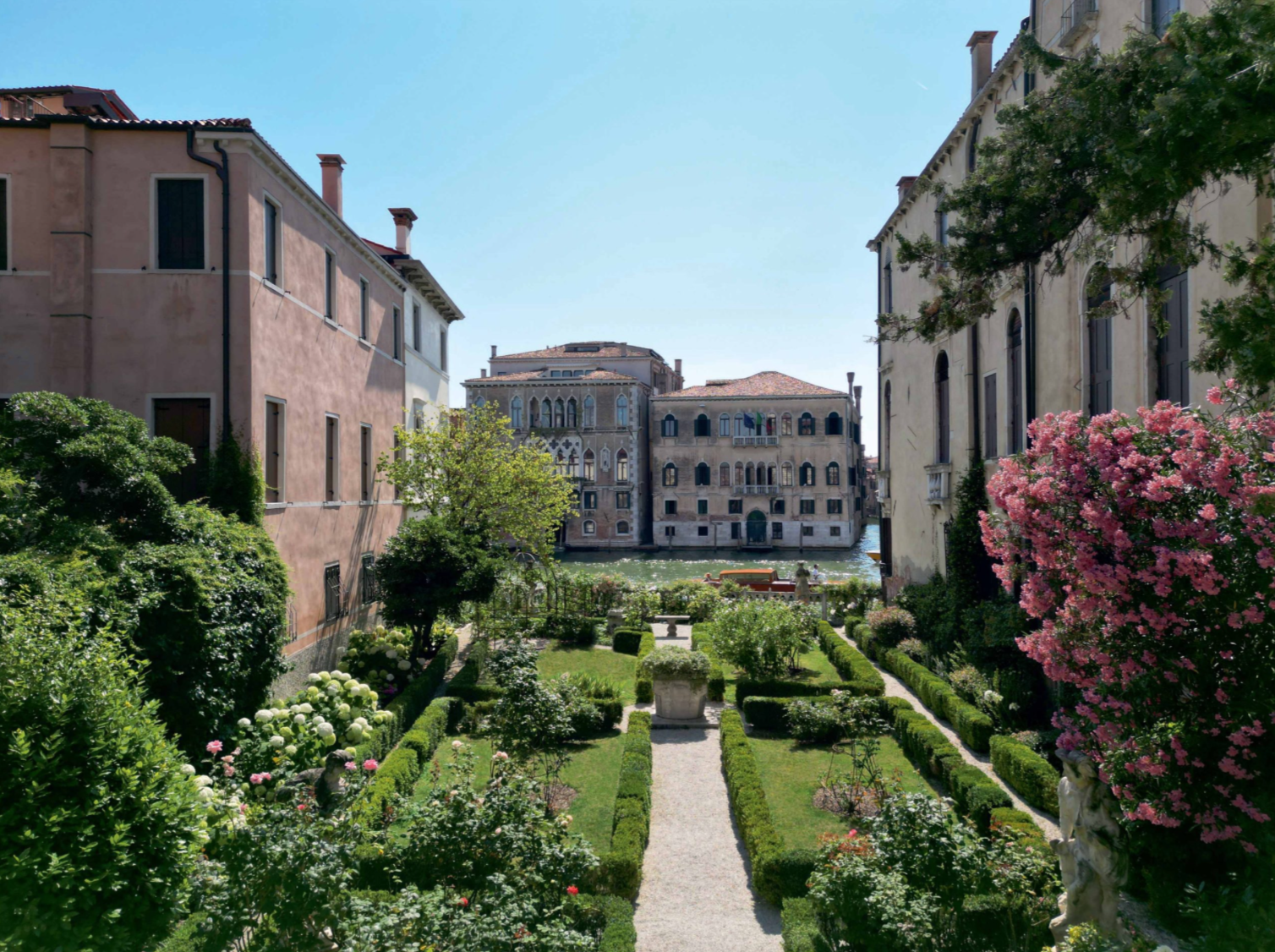
It was created, like many other Venetian gardens, towards the end of the 18th century—at the same time that many large palace gardens on the outskirts of Venice were disappearing, demolished due to the city’s industrial, residential, and commercial expansion.
Its layout is quite original, likely influenced by the building's unique structure. The garden stretches along the side of the palace, following a double alignment—one toward the inner courtyard and one toward the Grand Canal. It features a simple, elegant design of geometric sections bordered by boxwood hedges (Buxus sempervirens).
One of the garden’s most distinctive aspects is how its appearance shifts depending on where you view it. From the Grand Canal, the space appears symmetrically divided, with the focal point centered on the fountain of Hercules’ Nymphaeum. Entering from the palace’s 17th-century hallway, however, reveals a striking linear perspective that connects directly to the Neptune fountain on the opposite wall.
The garden is further enriched by 19th-century statuary and expertly shaped boxwood. At its heart stands a large wellhead bearing the Malipiero family crest, symbolizing the union between the Cappello and Malipiero families, with portraits of the spouses, Caterino and Elisabetta, carved into the stone.
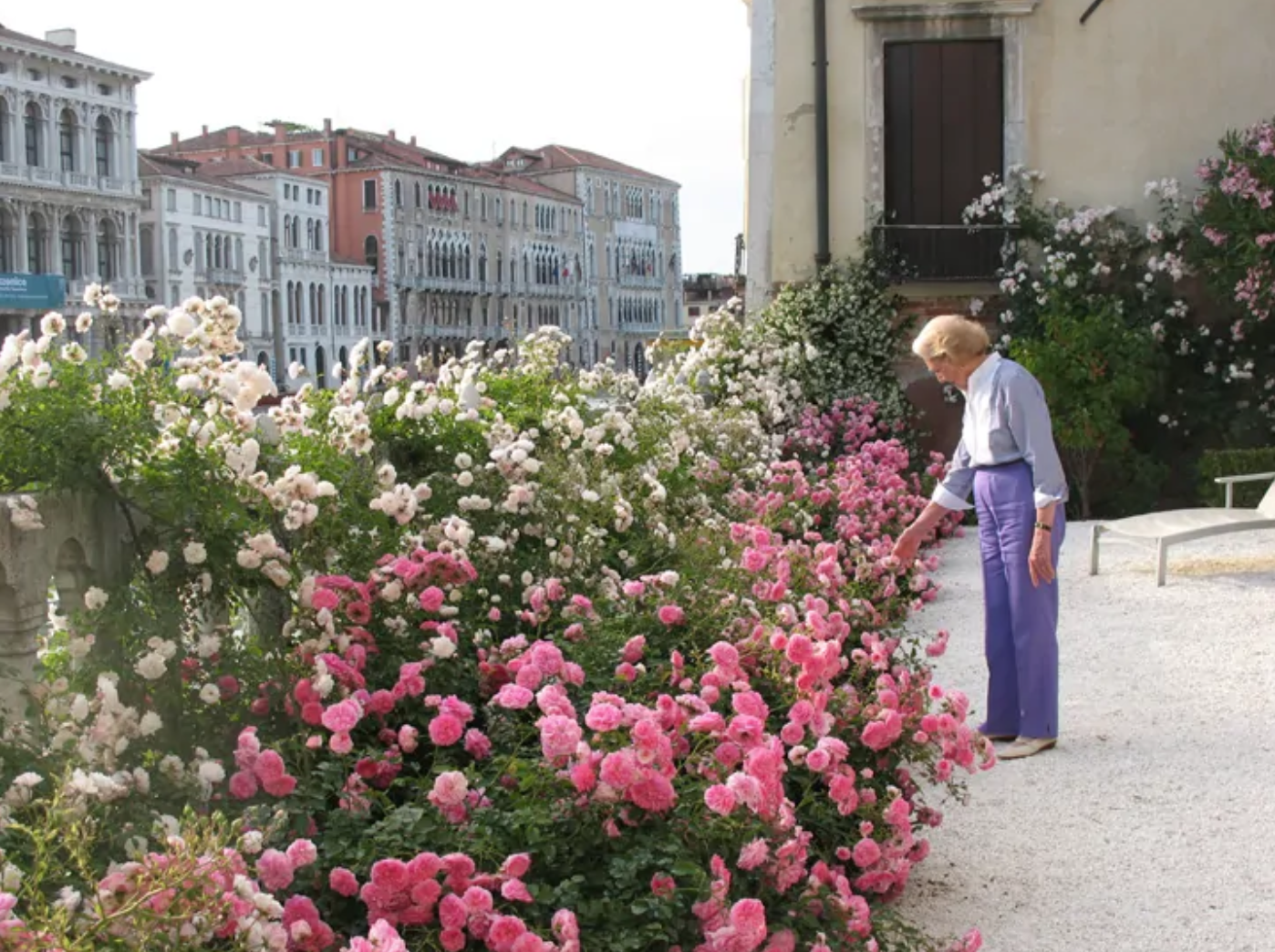
Giardini Savorgnan: A Peaceful Green Escape in Venice
Hidden behind Palazzo Savorgnan, the Giardini Savorgnan is one of the largest public green spaces in Venice, covering nearly 10,000 square meters. Originally a botanical garden, it now offers a calm, shady retreat with nettle trees, oaks, chestnuts, plane trees, and yews.
The gardens are among the few public parks in the city, along with the Giardini Reali and Papadopoli Gardens. Locals and visitors alike enjoy its quiet paths, children’s play area, and peaceful atmosphere—perfect for a picnic or a break from sightseeing.
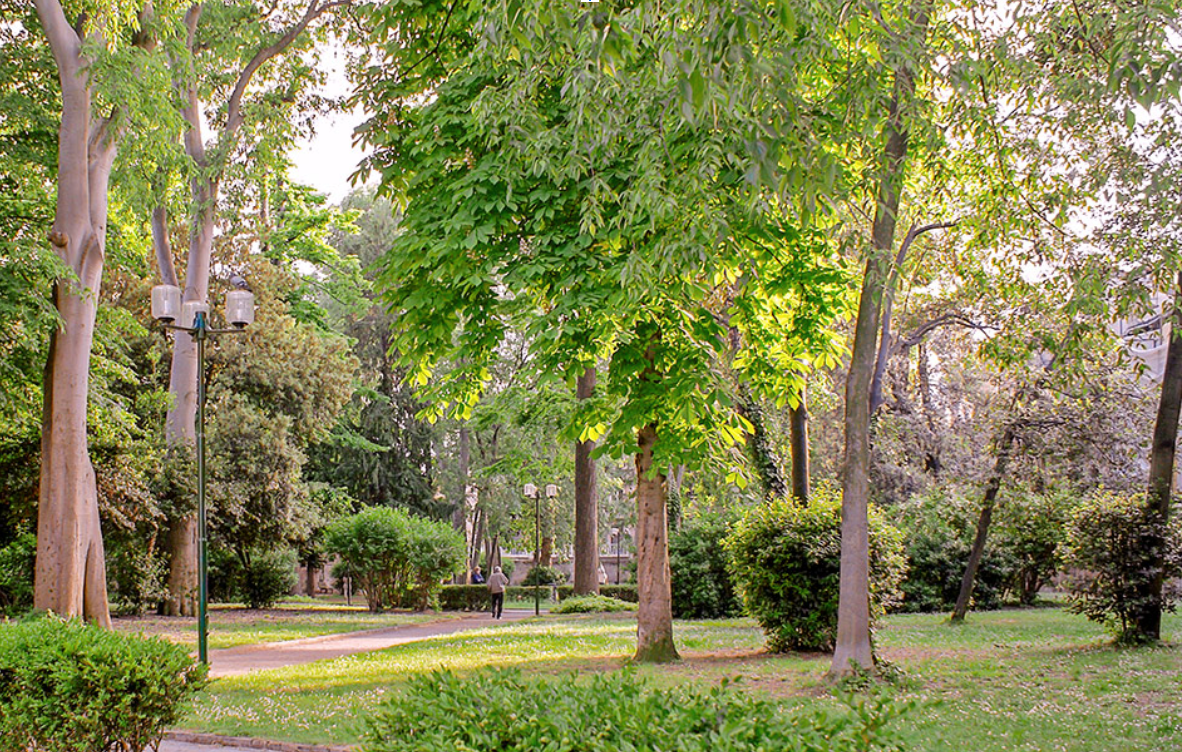
The Garden of the Querini Stampalia Foundation
Tucked away in the Castello district, the Querini Stampalia Foundation is one of Venice’s most refined and lesser-known treasures. Housed in the only Venetian noble palace to survive the fall of the Republic, it features a stunning garden designed by Carlo Scarpa.
Created in 1949 as part of a restoration to protect the ground floor from flooding, Scarpa transformed a former storage yard into a poetic space where architecture and nature blend seamlessly.
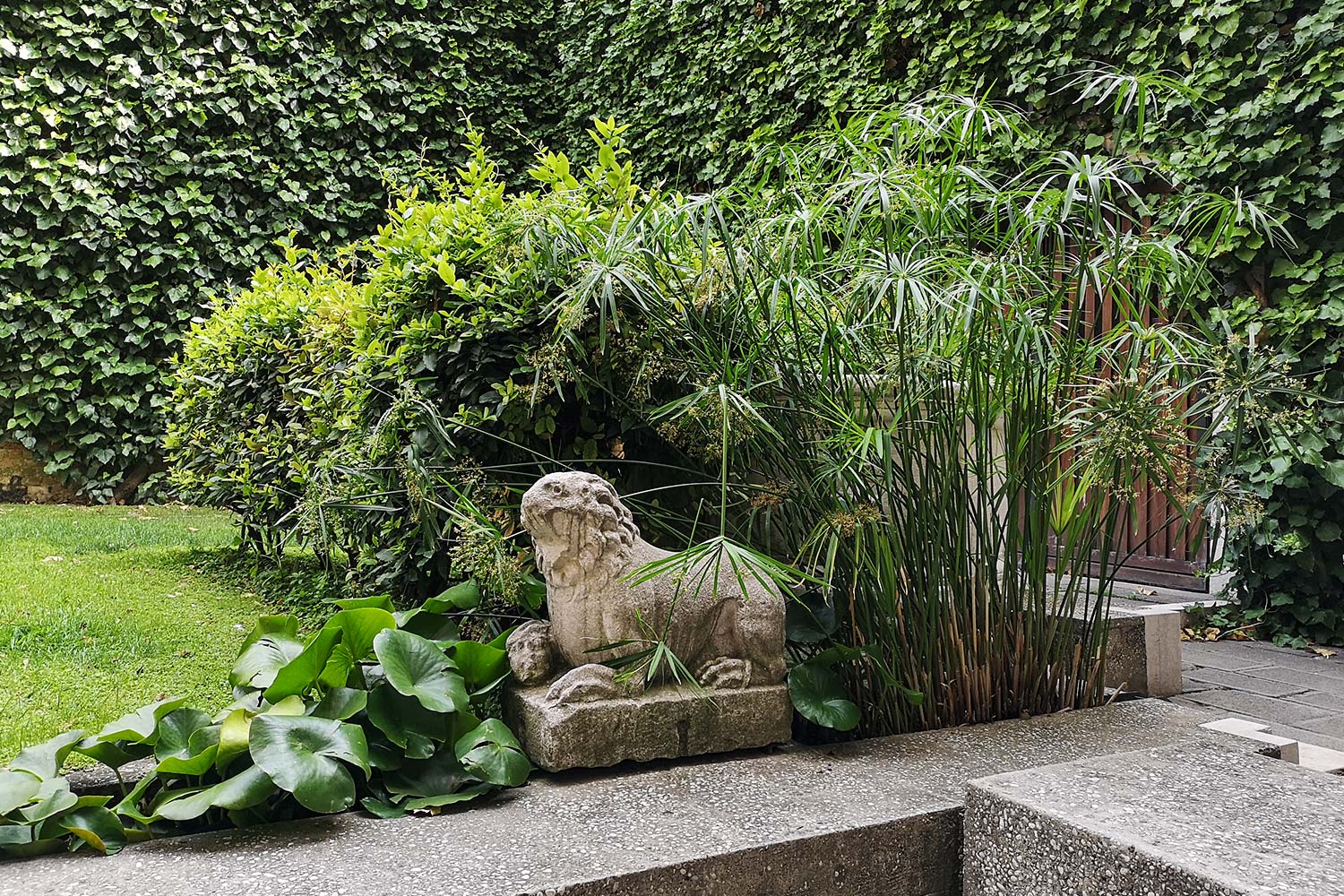
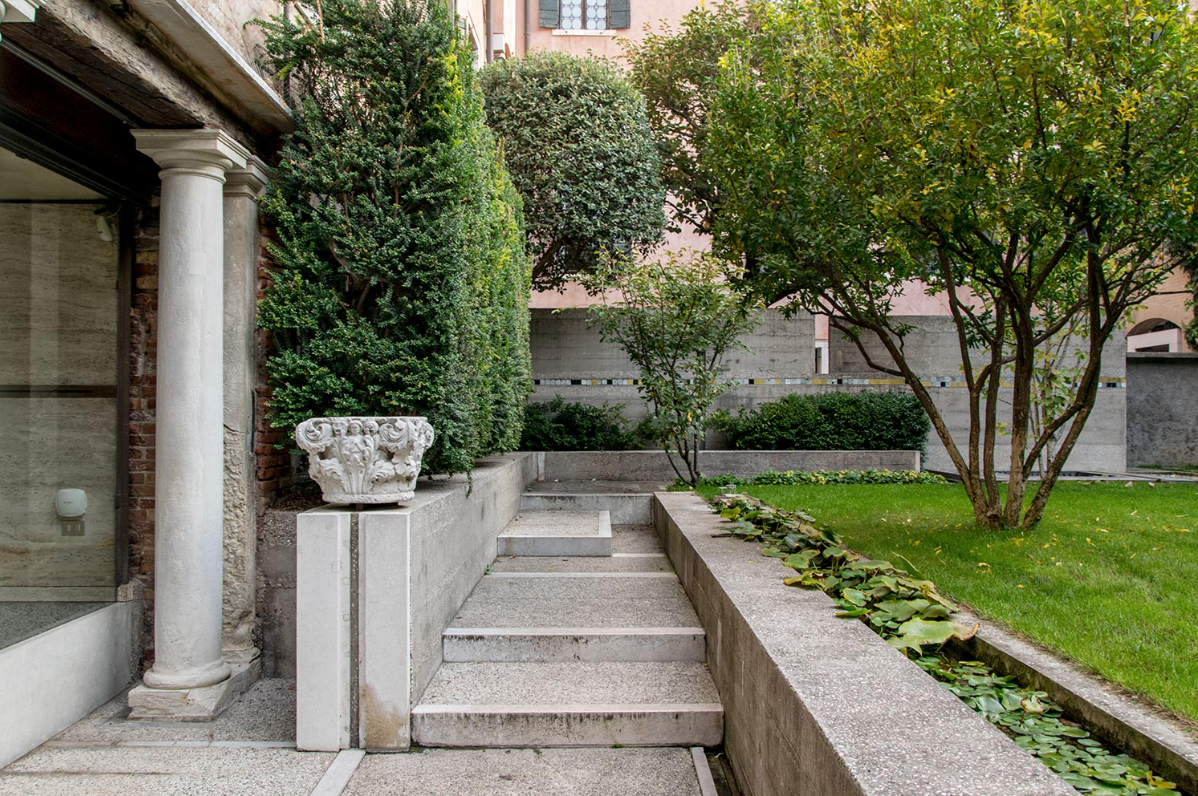
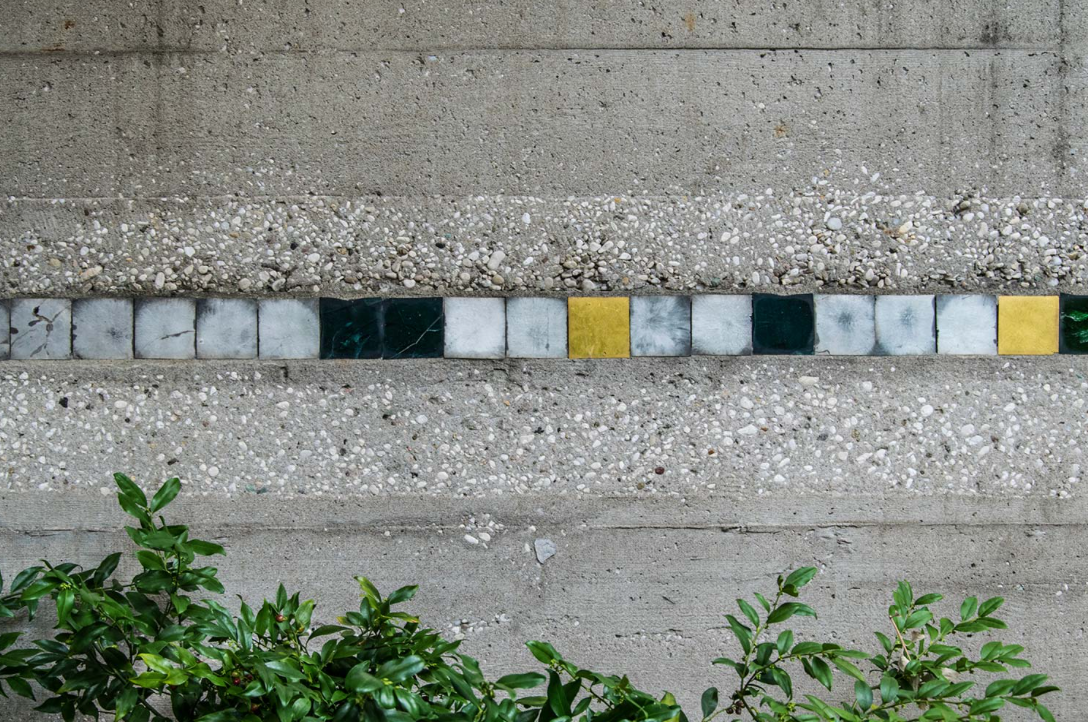
Water flows from the canal through sleek channels into a copper and mosaic basin, framed by alabaster labyrinths and a Murano glass mosaic by Mario De Luigi.
Still far from the tourist crowds, the foundation offers a unique mix of historic charm and modern design: a perfectly preserved house museum, a vast library, and a stylish café by Mario Botta overlooking Scarpa’s tranquil garden.
Giardino di Palazzo Contarini dal Zaffo
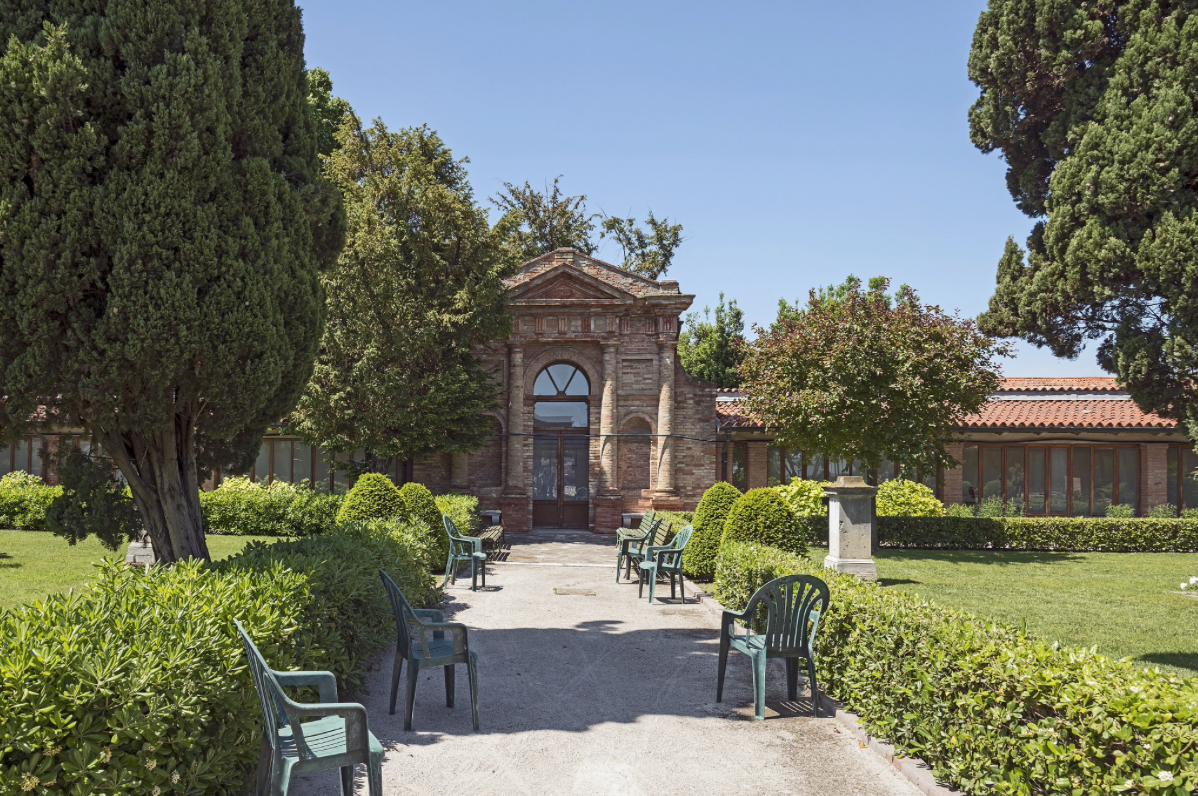
Tucked between Palazzo Contarini dal Zaffo and Palazzo Minelli Spada—now residences for the elderly—this garden offers a blend of English-style landscaping and striking rows of tall cypress trees. At its edge, overlooking the Sacca della Misericordia and the lagoon, sits the small, secluded Casino degli Spiriti, a Renaissance retreat once favored by scientists and writers in the 16th century. Though usually closed to the public, visits can be arranged upon request.
Giardini di Palazzo Cavalli-Franchetti
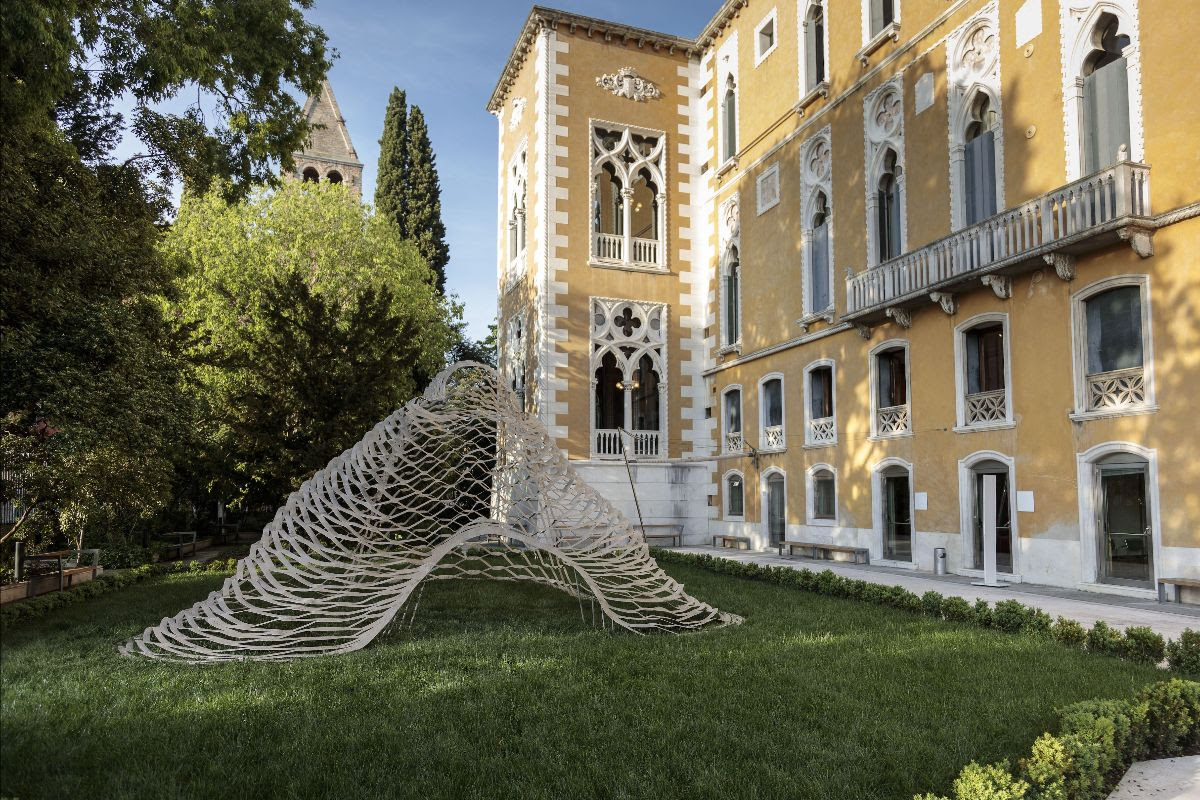
Home to the Istituto Veneto di Scienze, Lettere ed Arti, the garden of Palazzo Cavalli-Franchetti can be admired even from the Accademia Bridge.
To the left of the Gothic-style palace, a gently undulating rectangle of greenery unfolds toward the Grand Canal, framed by an elegant Gothic balustrade. Beyond it stretches a small grove of centuries-old trees, connecting Campo San Vidal to Campo Santo Stefano, where the garden opens its gates to the city.
The Sculpture Garden of Palazzo Venier dei Leoni
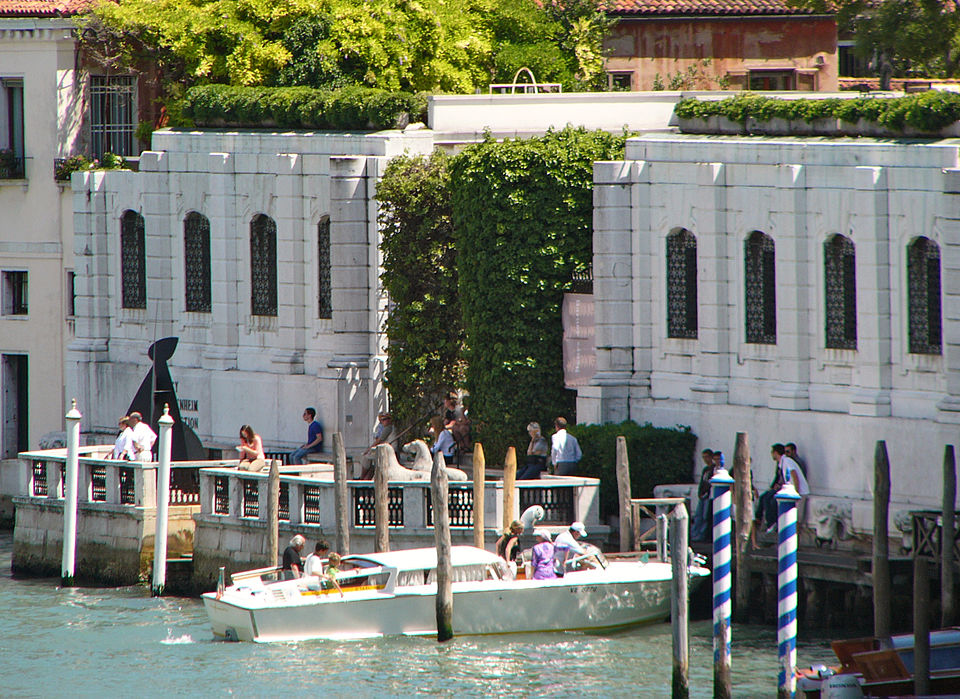
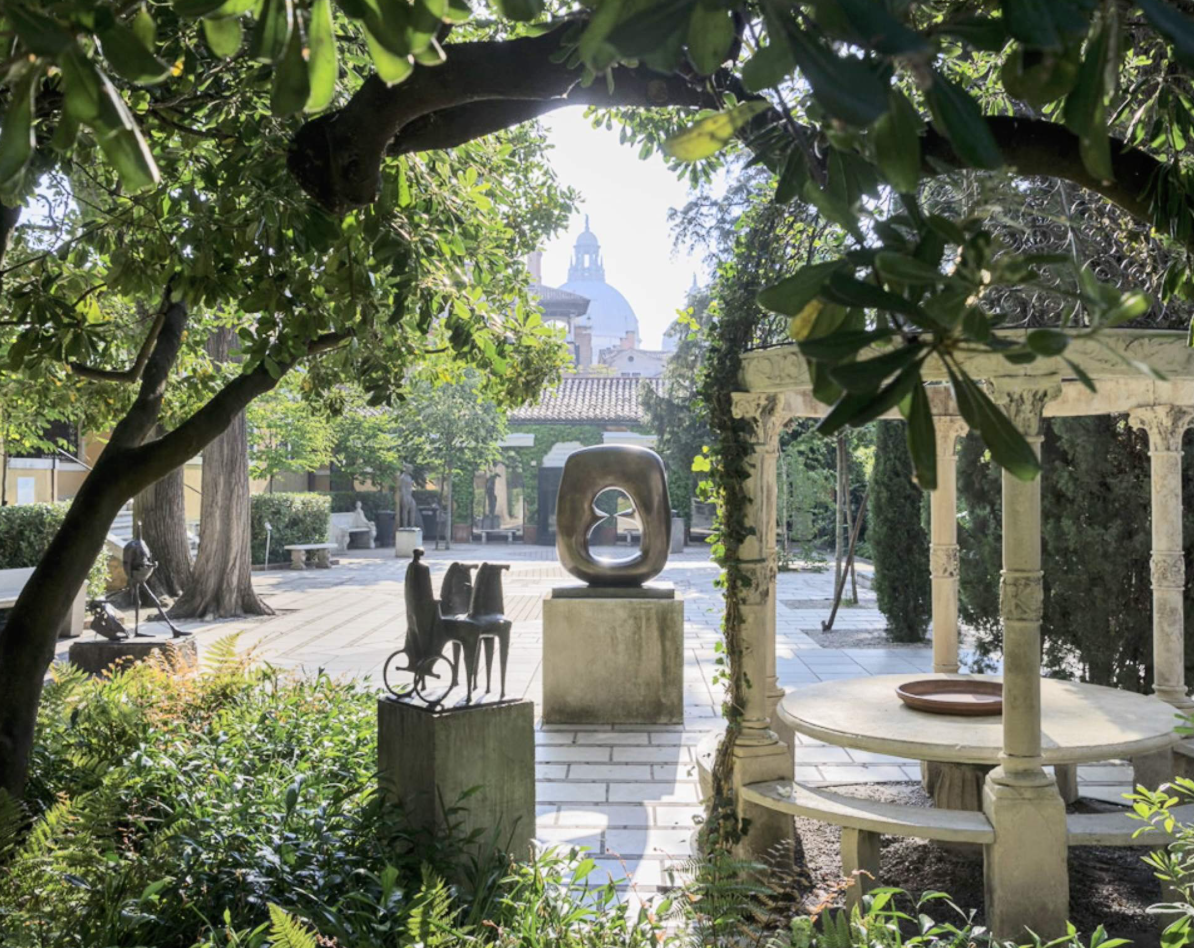
Before stepping into the world of Picasso, Kandinsky, Pollock, and other 20th-century masters, visitors pass through this lush garden, filled with sculptures by Arp, Giacometti, and Moore, nestled among evergreens and quiet corners. At its center stands Jean Arp’s Fruit Amphora, in dialogue with Giacometti’s elegant female figures, while Peggy’s famous Byzantine throne invites anyone who dreams of feeling like a collector—if only for a moment.
An oasis of art and greenery, where time seems to stand still.
In the heart of Dorsoduro lies one of Venice’s most captivating gardens: the Sculpture Garden of the Peggy Guggenheim Collection. Chosen in 1949 by the renowned collector as both her residence and museum, today it’s a space where art and nature coexist in perfect harmony.
Venice may be known for its gondolas and grand palazzi, but behind ivy-covered walls and tucked between centuries-old bricks lies a greener, quieter side of the city. So next time you visit, don’t just look up at the domes or down at the canals—peek behind the gates, follow the scent of wisteria, and let the city’s leafy secrets surprise you. Venice, after all, blooms where you least expect it.