Is this the symbolic end of Venice’s modern consumer era? The closure of the Fondaco dei Tedeschi — one of the most significant symbols of intercultural exchange between Northern Europe and Venice — is the perfect moment to look back at its great history and the people who shaped its life.
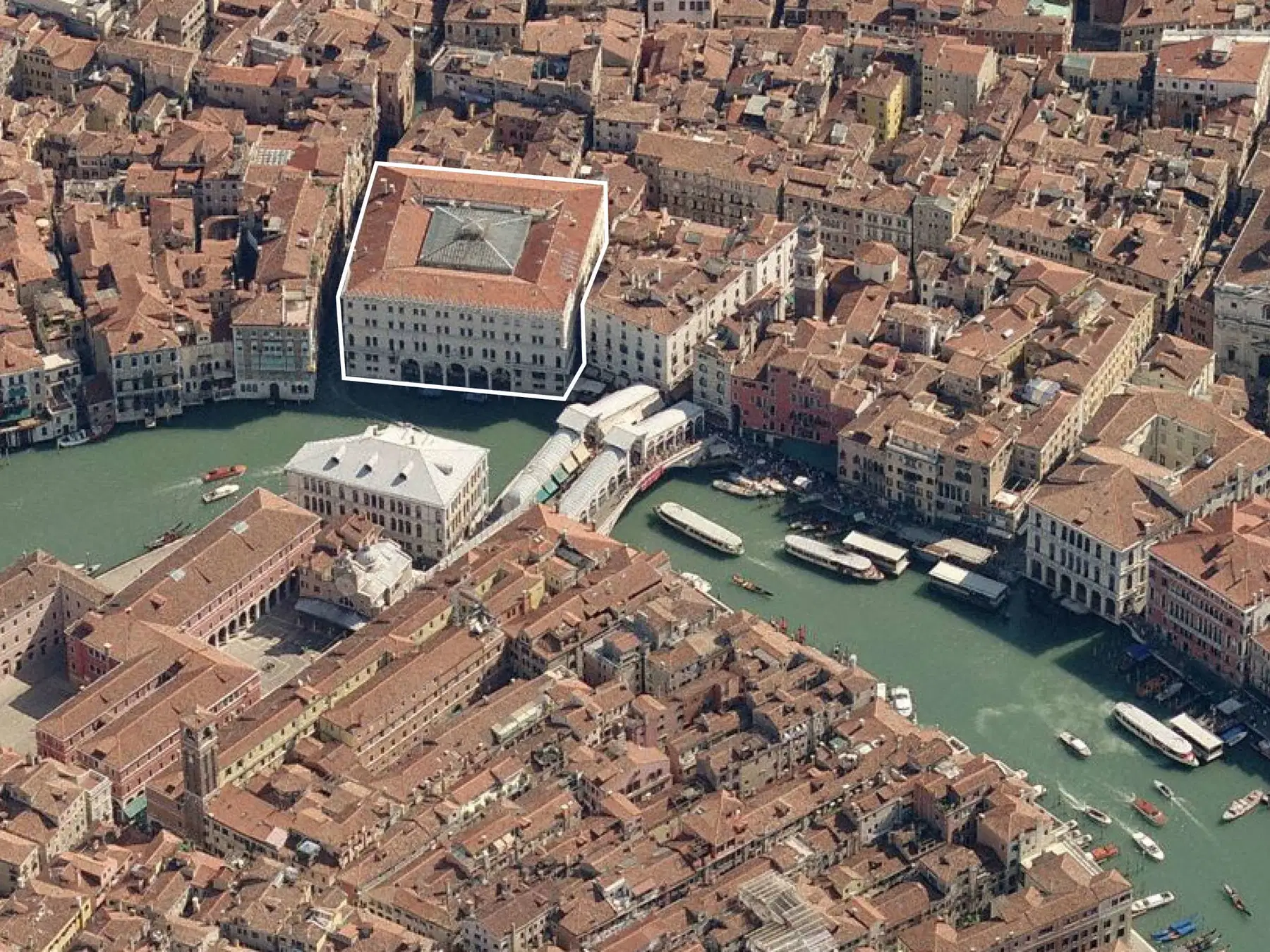
Founded in the 1220s as both a hotel and a trading center for German merchants, the Fondaco was central to Venice’s commercial life. Its walls saw countless travelers and traders pass through, including Albrecht Dürer, one of the greatest artists of the Northern Renaissance. But the building’s early success was disrupted by a massive fire that burned for days, destroying much of its original structure. Merchants were forced to relocate across the city.
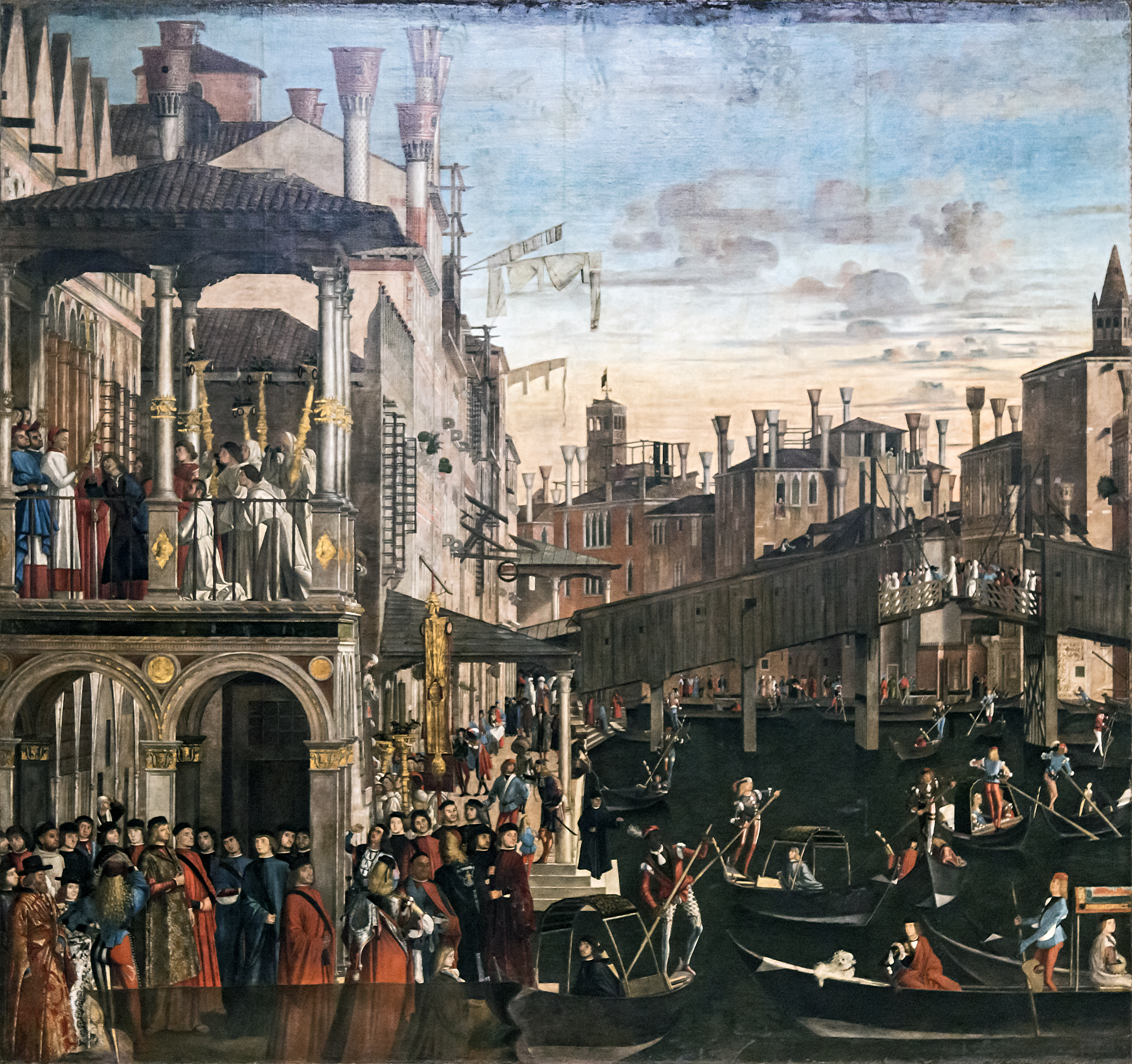
Very few original images of the Fondaco have survived. One of them is Jacopo de’ Barbari’s famous map of Venice, which shows that the Fondaco was made up of many smaller buildings used both for storage and living quarters.
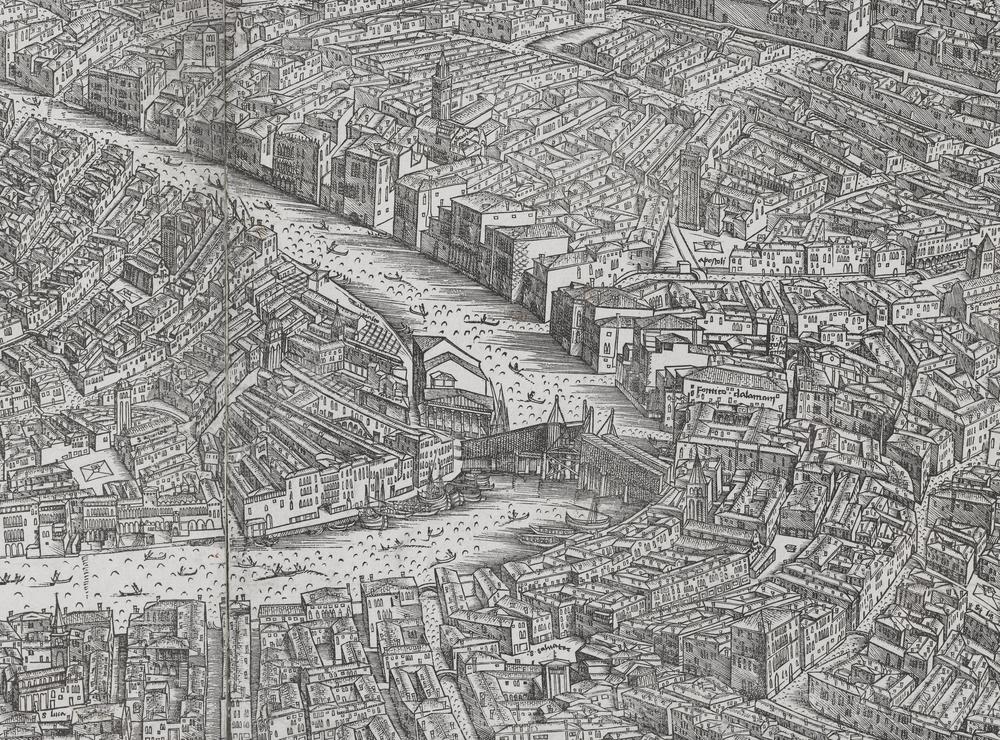
The original Fondaco can also be seen in Vittore Carpaccio’s painting “Miracle of the Cross at the Rialto Bridge,” where it appears in the background.
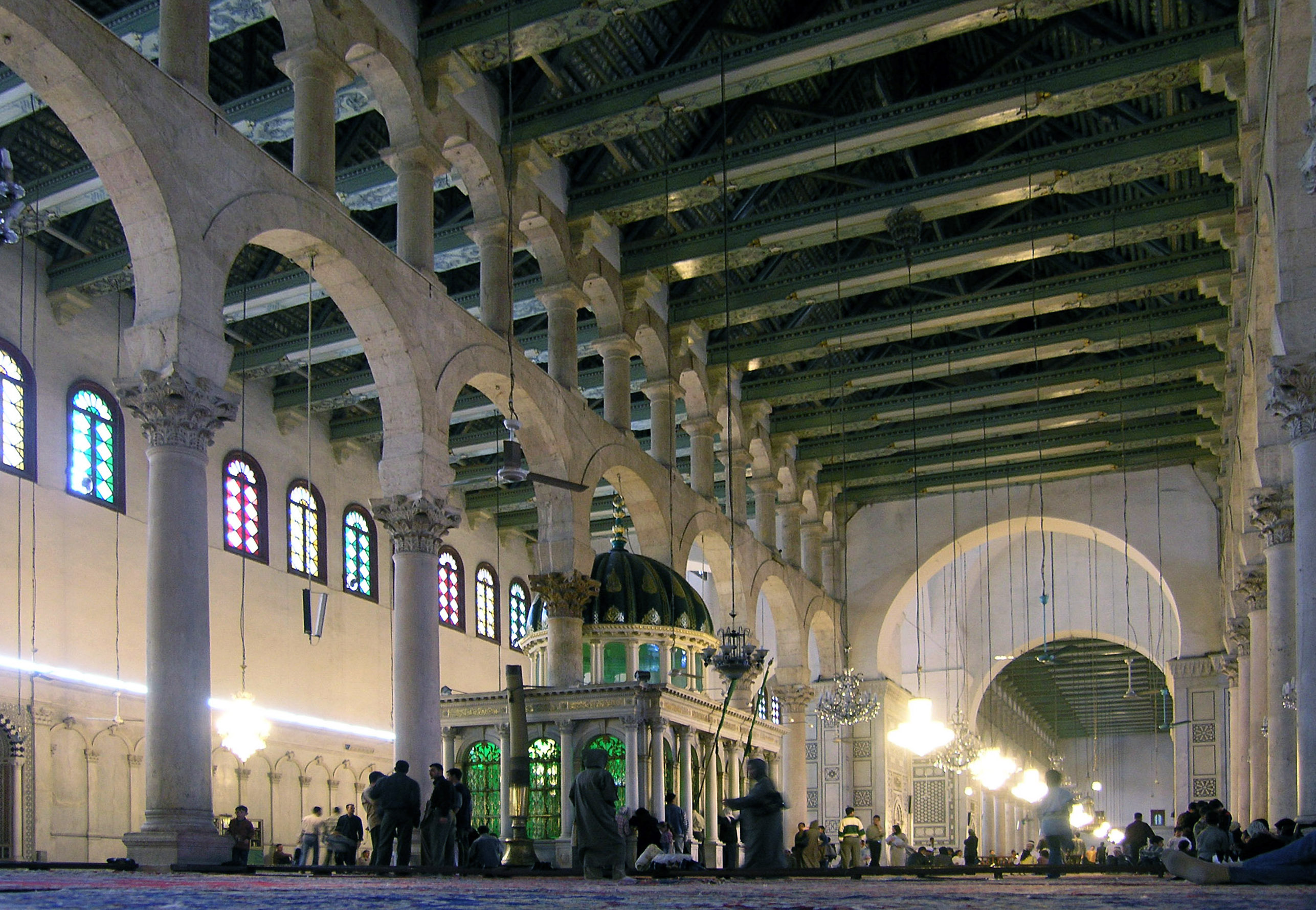
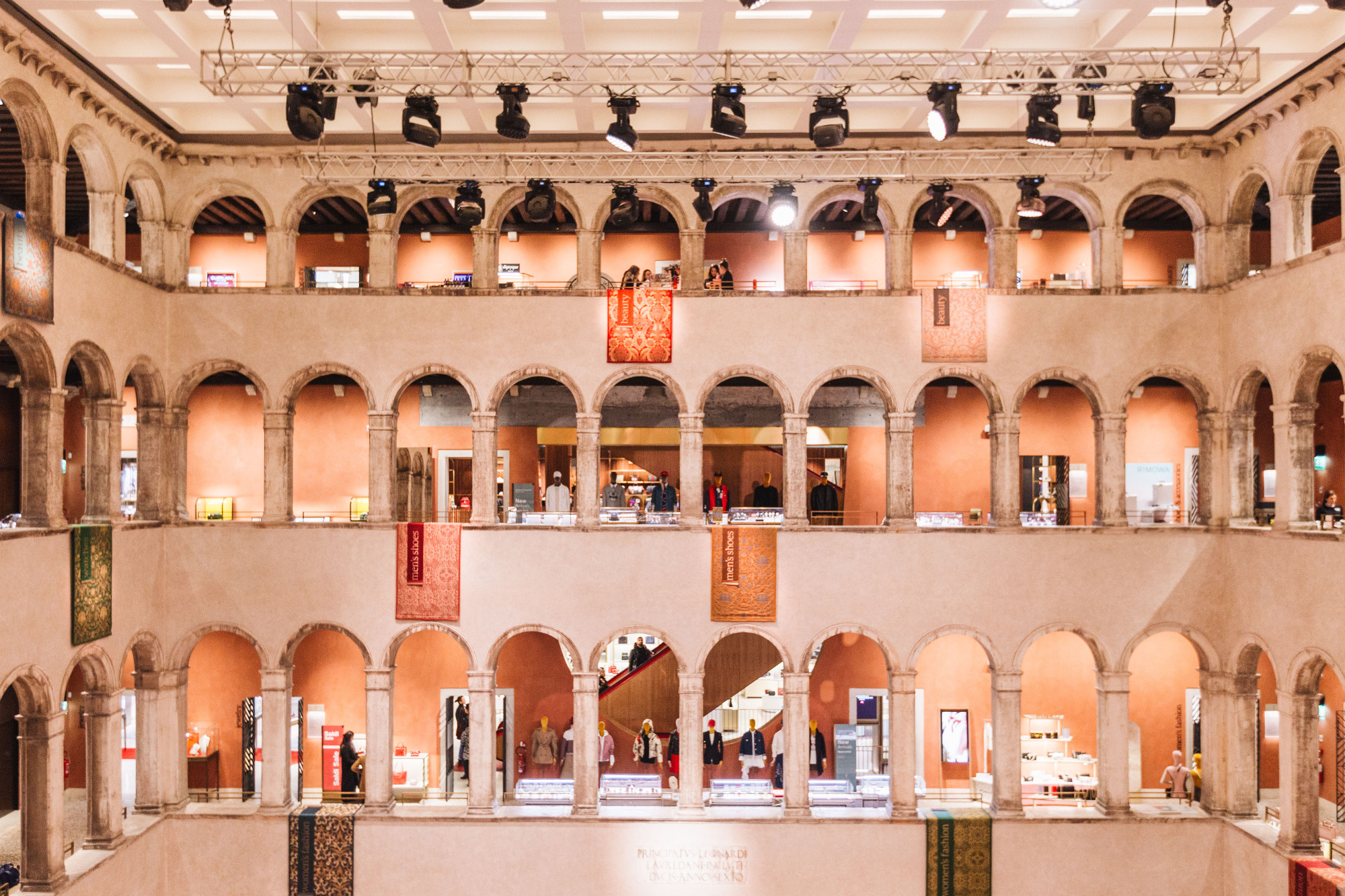
Three years after the fire, the building was reconstructed and reopened on August 1st with a grand mass. The new Fondaco showed clear influences from Islamic architecture. The arches on the lower floor, combined with the smaller arches above, visually recall the Great Mosque of Damascus or Cairo’s Wikala al-Ghuri.
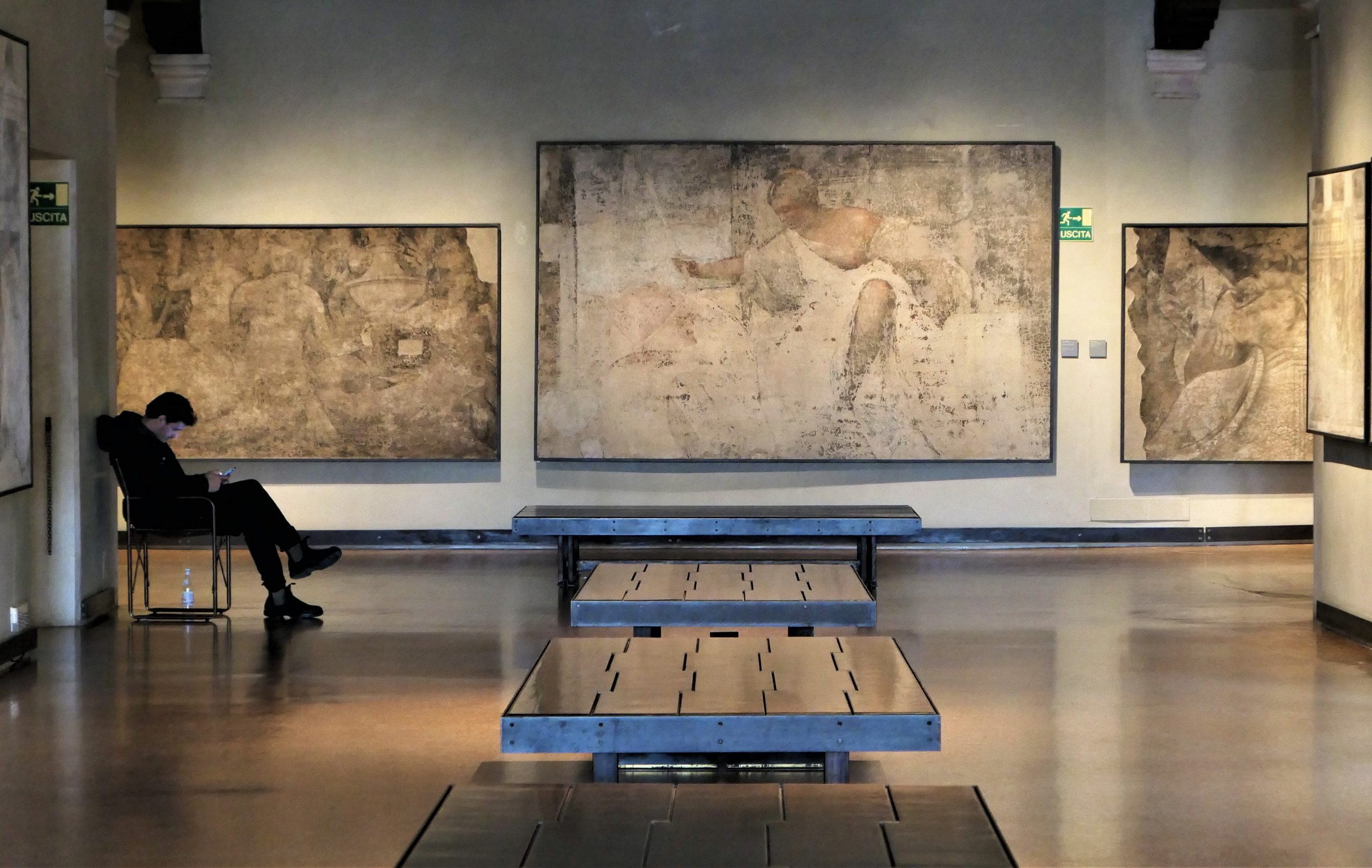
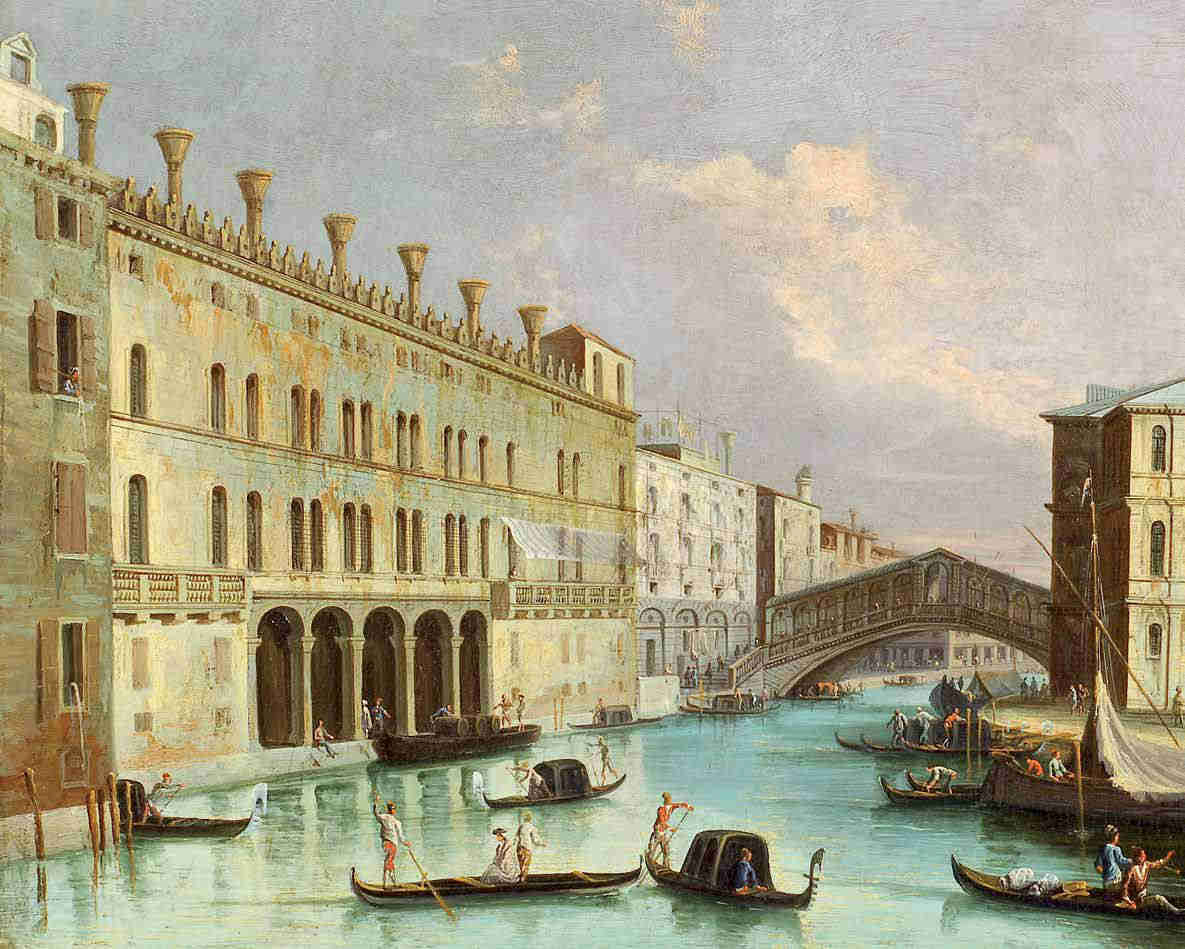
The external walls were frescoed by masters Titian, Giorgione, and their assistants. Fragments of these works can still be seen today in the Gallerie dell’Accademia and at the Ca’ d’Oro museum. The building itself was not only beautiful; it was designed with practicality in mind. The main façade faced the Grand Canal, where a five-bay loggia allowed merchants to unload goods directly from boats.
Above, the windows were arranged in repeating pairs across the facade, with gaps in between for chimneys — a visible reminder that the building once housed many small rooms. The roofline was decorated with ornamental cresting, which is can still be seen today.
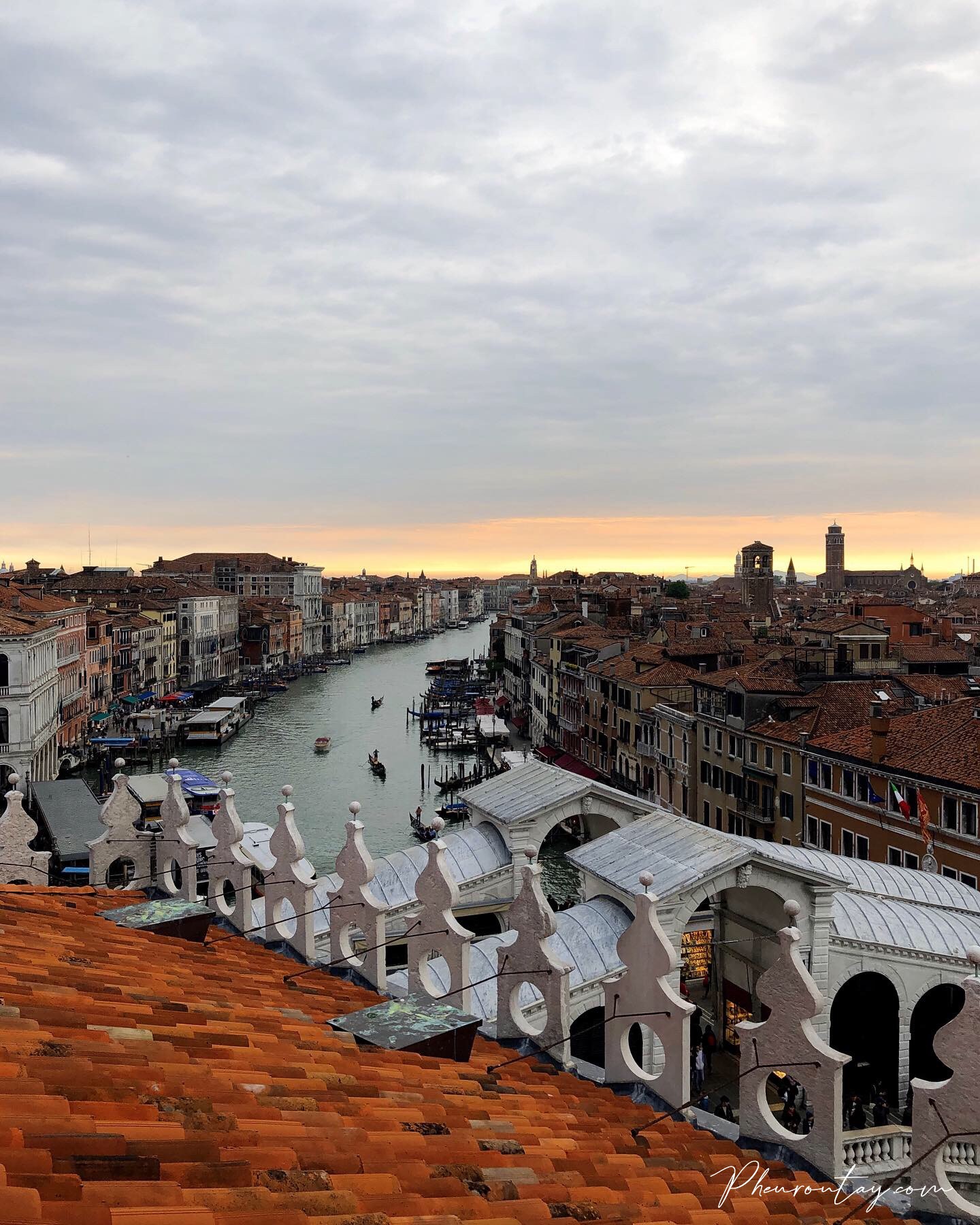
^Image Via Pheurontay Website
In the 19th century, like many places in Venice, the Fondaco dei Tedeschi was occupied by Napoleonic troops.
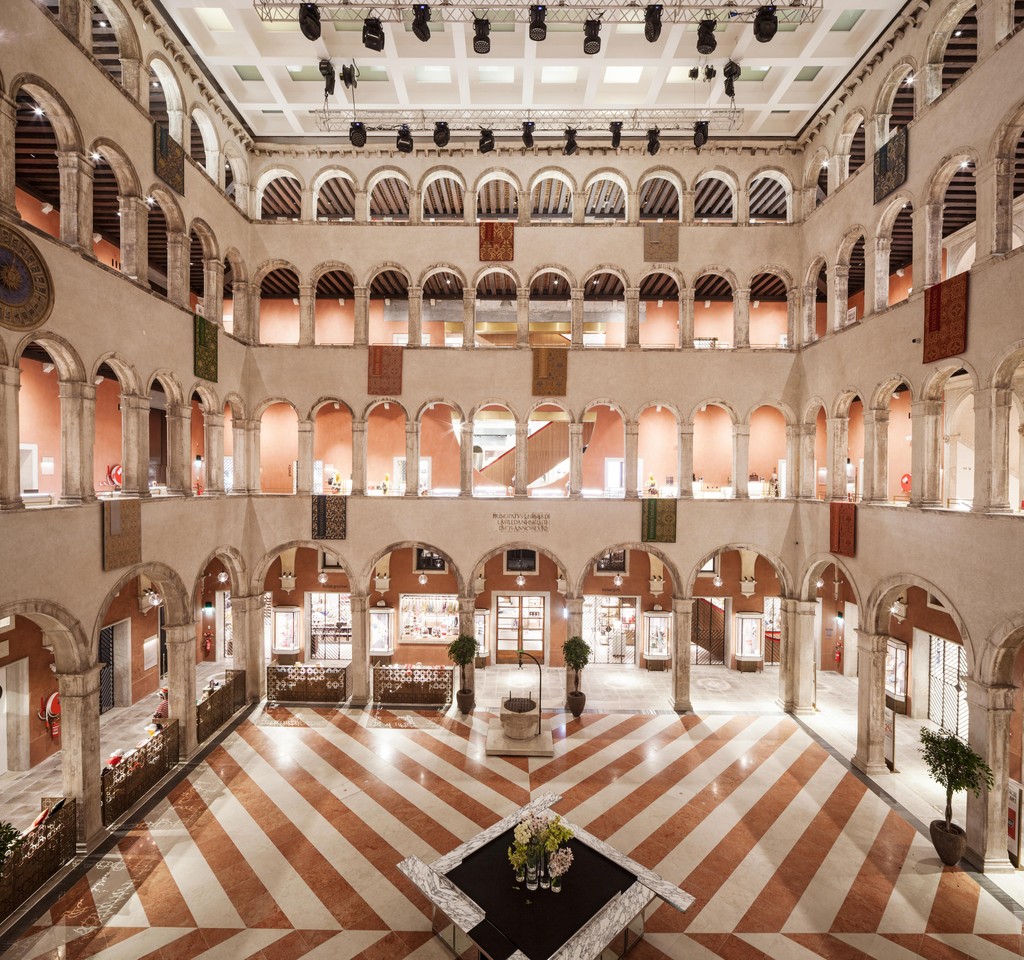
Later, the building’s appearance and function changed. In the 1930s, it was turned into a post office, which brought major architectural changes: the original towers were removed, the courtyard was covered with glass, new windows were added, and the structure was rebuilt with modern concrete.
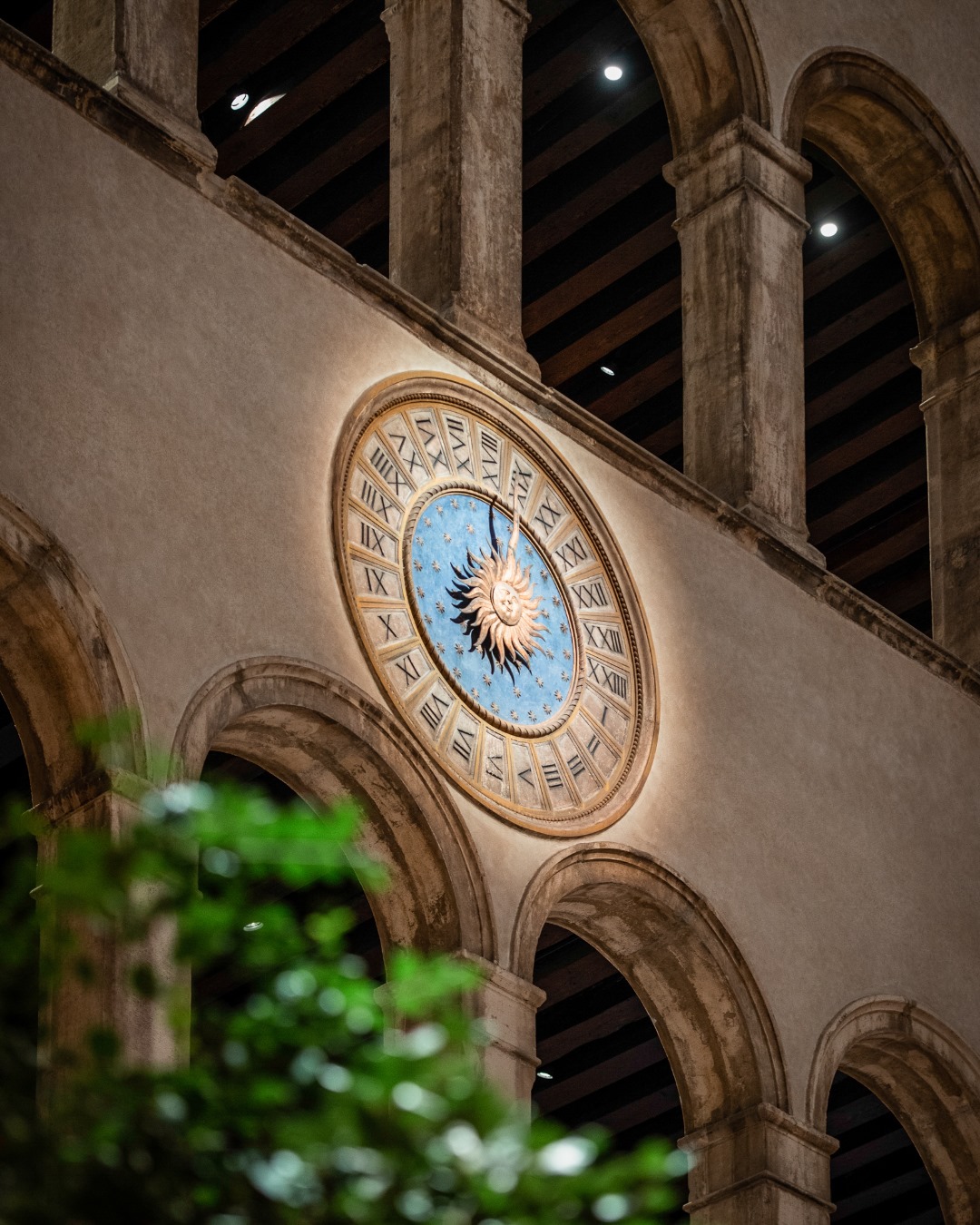
However, historic details are still visible today - the large wall clock from 1571 and the crenellations along the roof with circular cutouts topped by spheres.
Even as its purpose shifted, the building remained an important place for Venetians for 70 years. In the early 2000s, it was sold to a private company, and in 2016, a new chapter for the Fondaco dei Tedeschi began with its renovation by AMO/OMA.
Rem Koolhaas, the founder of the studio, famously said, “Shopping is probably the last remaining form of public activity.” This idea is clearly reflected in how the renovation turned the Fondaco into a space that blends commerce with public life.
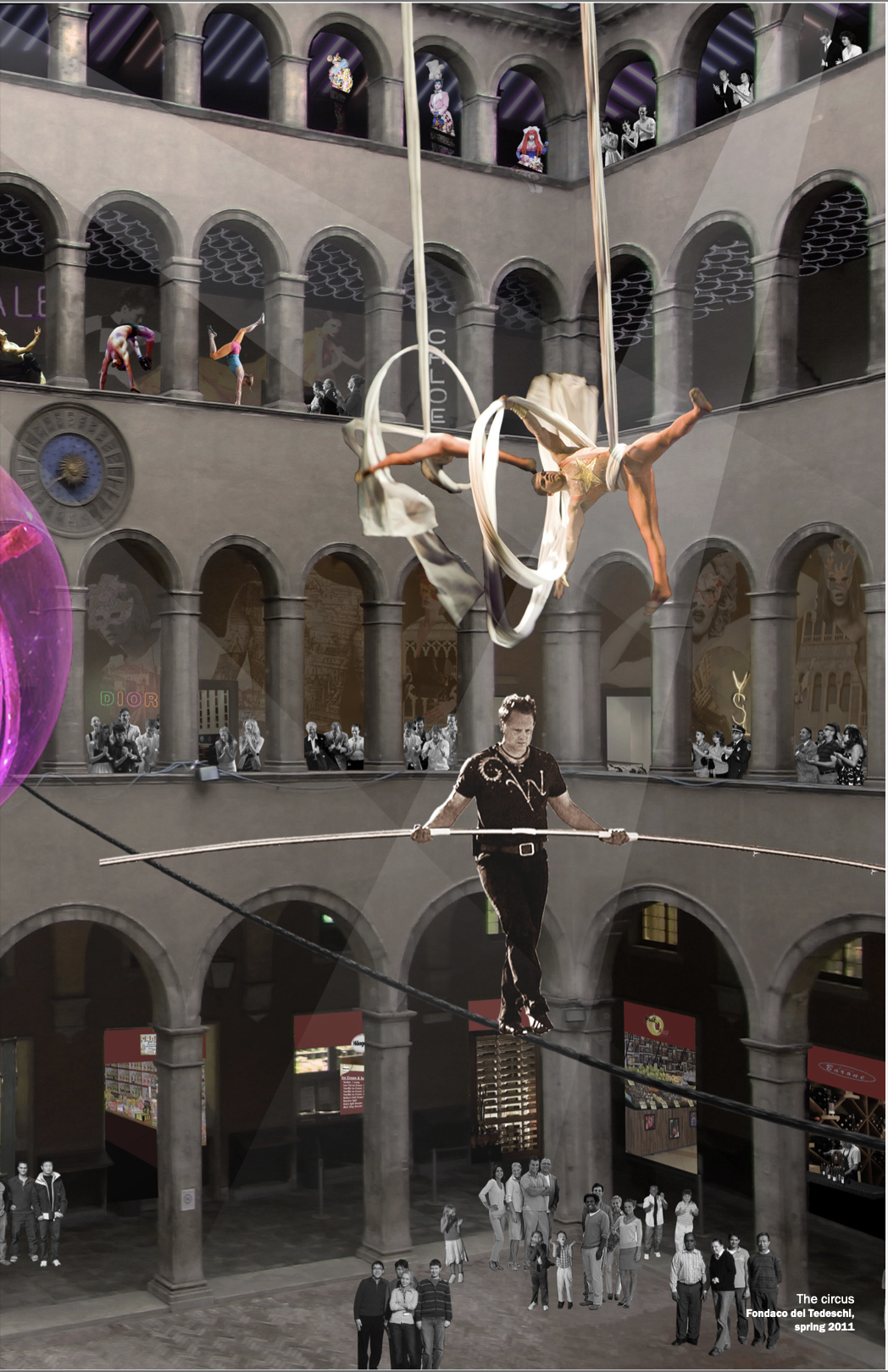
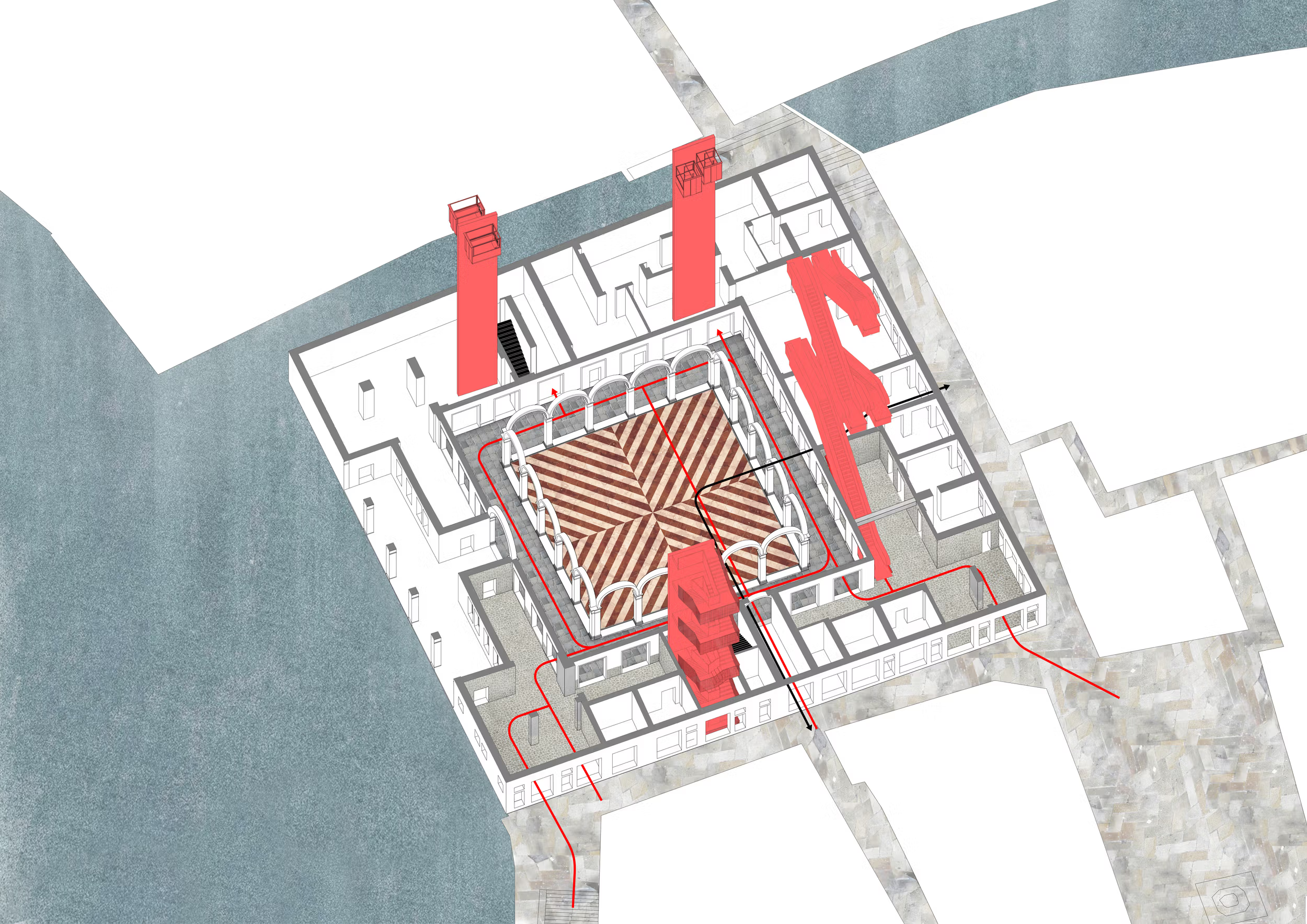
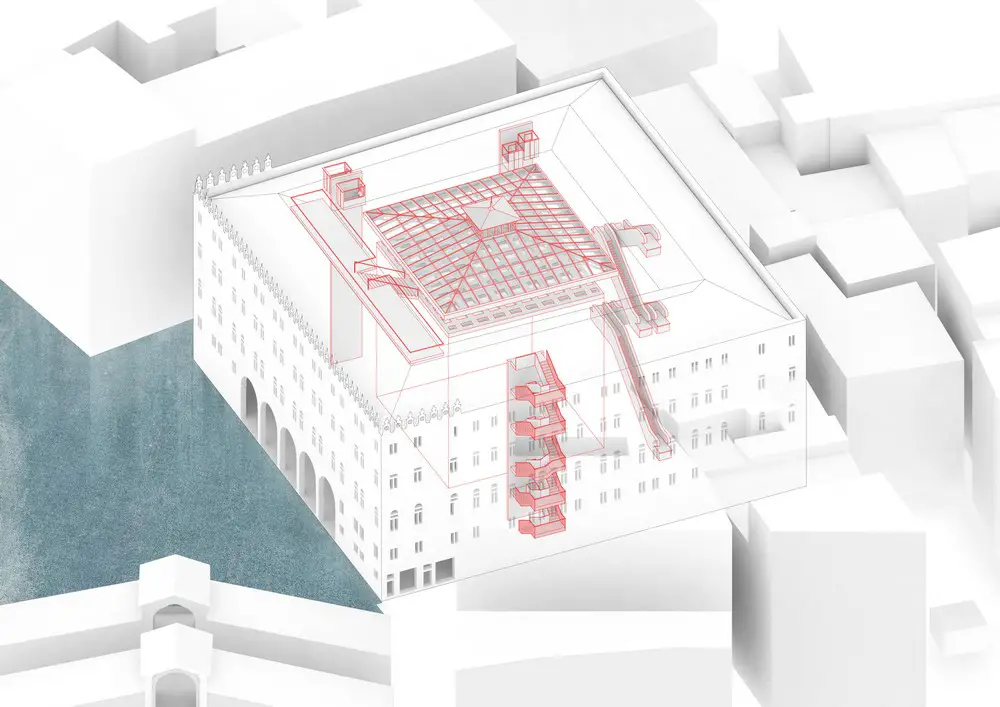
Since 1987, the Fondaco dei Tedeschi has been officially recognized as a historic monument. OMA’s renovation focused on a few key interventions: adding vertical connections like staircases and lifts that made the building work as a department store and public event space, a place where culture is consumed.
Let’s take a closer look at OMA’s architectural choices. Both the rooftop (built above a new steel and glass floor) and the courtyard became central spaces for cultural events, hosting exhibitions, concerts, conferences, and film screenings. Moreover, one more panoramic platform appeared in Venice – a large wooden terrace with spectacular views over the city.
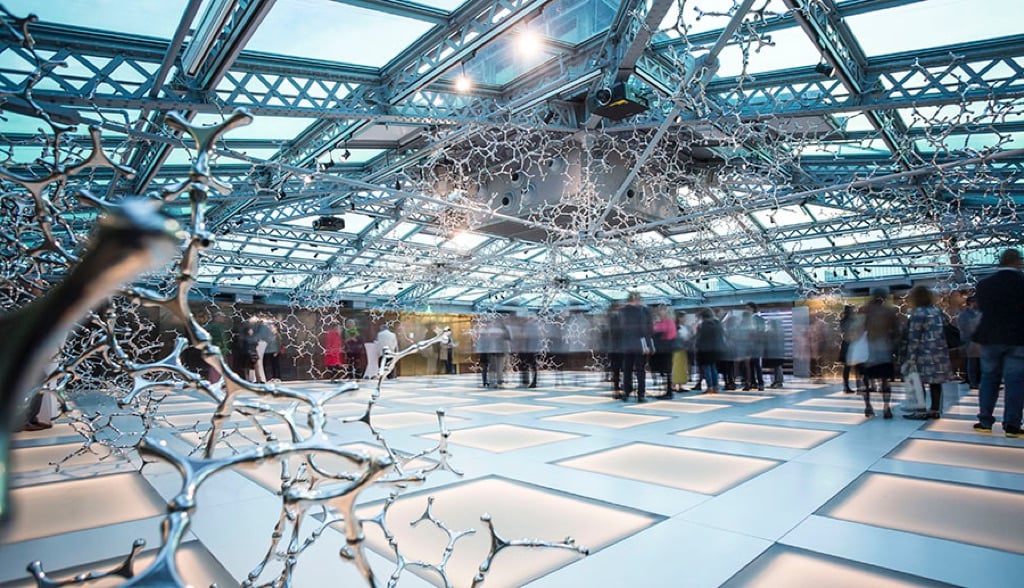
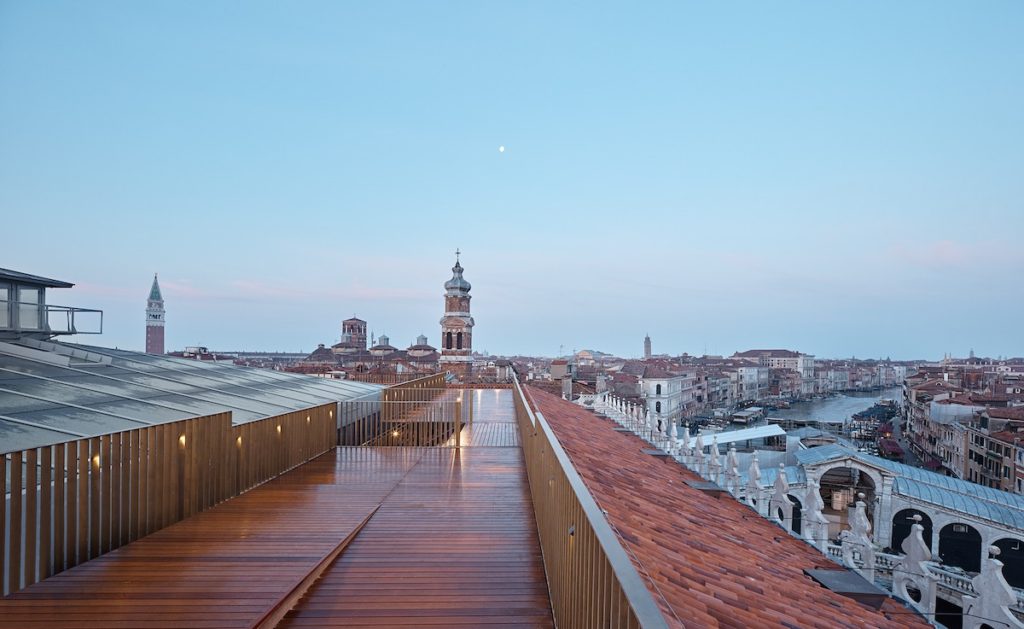
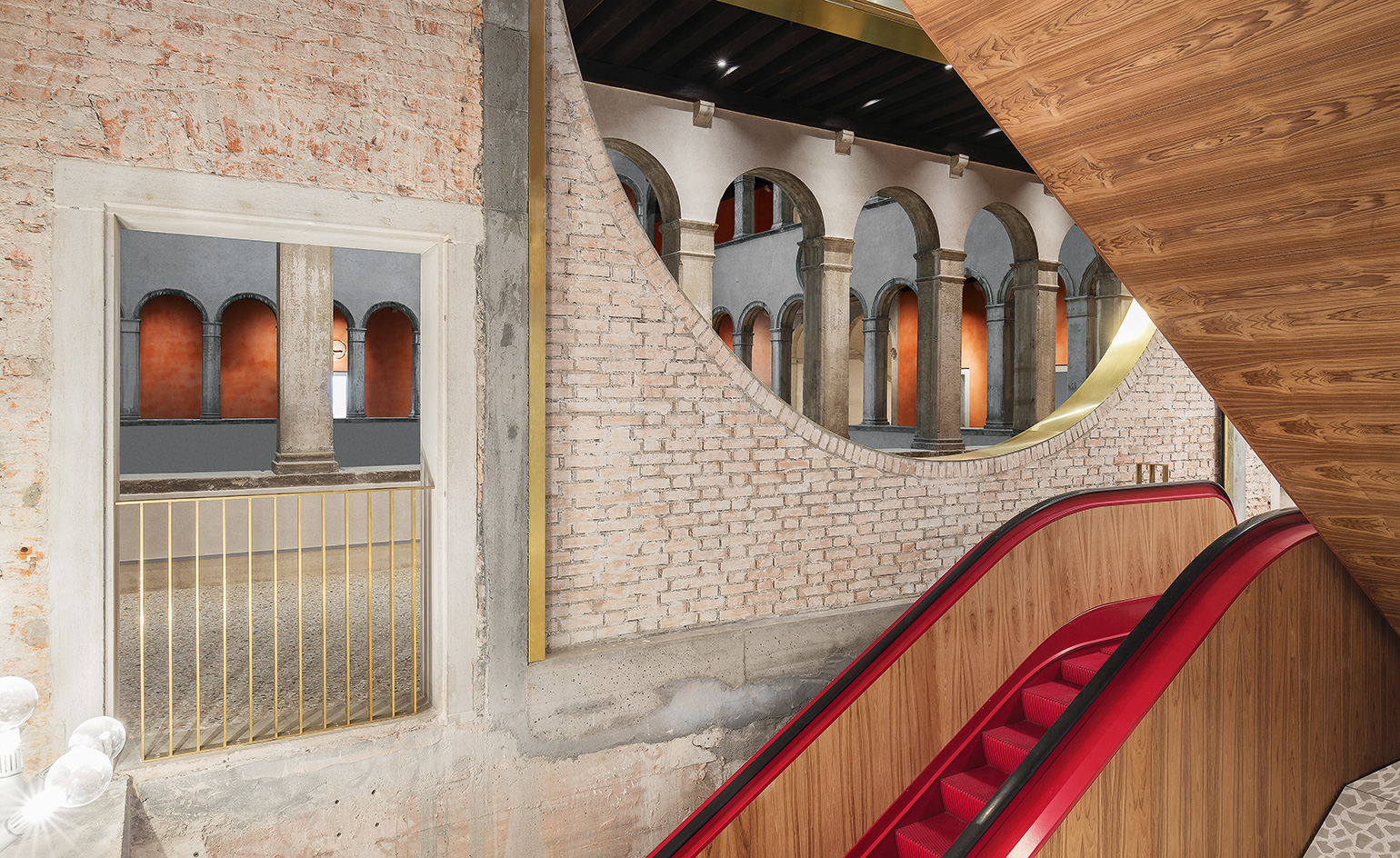
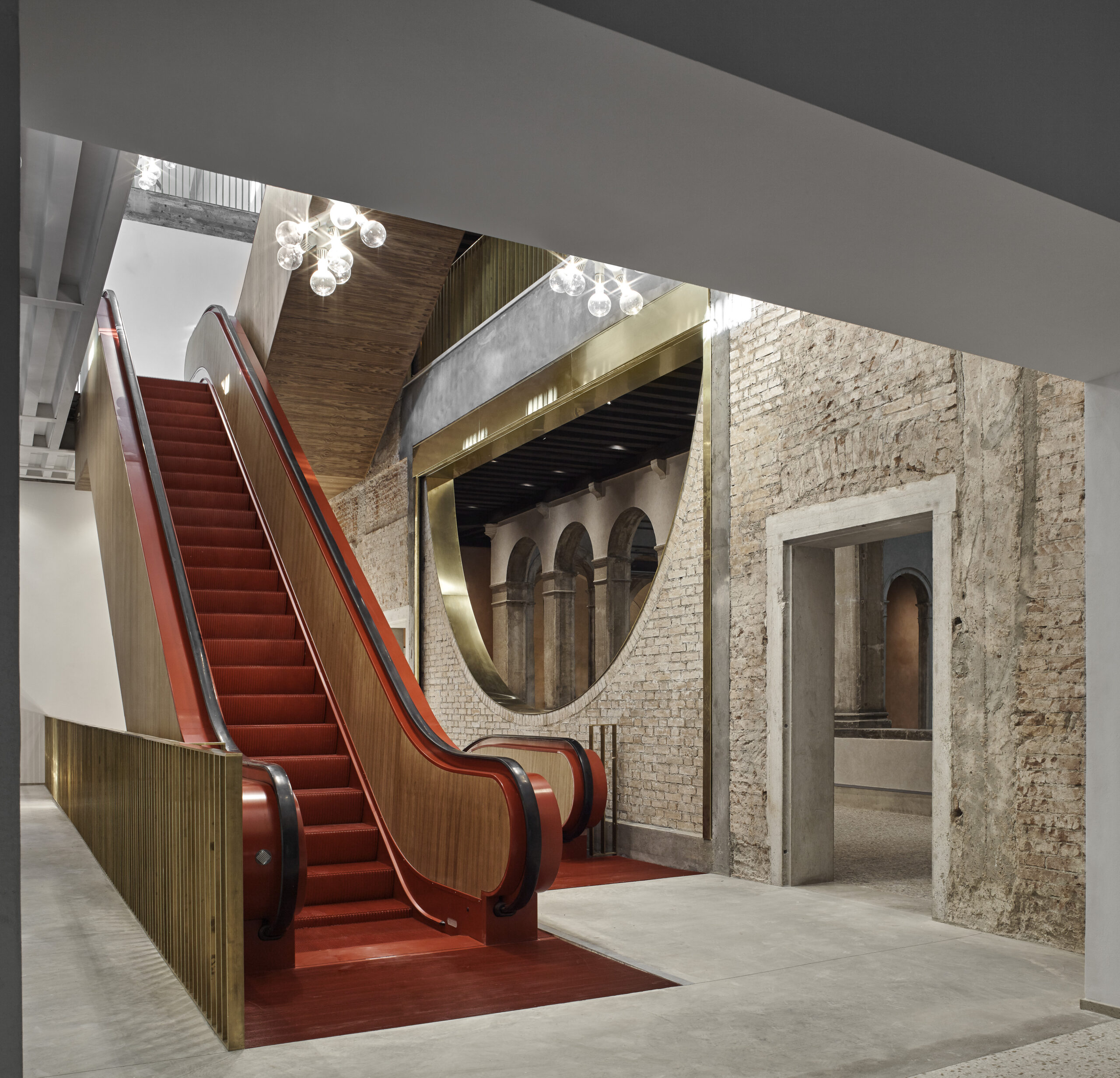
True to the building’s spirit, the design stayed both beautiful and practical. Inside, practical elements were carefully integrated: escalators were installed to create a new public route through the building; the rooms were reorganized in a way that respects the original layout; and key historic spaces, like the corner rooms, were left untouched.
The red-and-white courtyard pattern, made from alternating Rosso di Verona marble and Istrian stone, reflects a mix of OMA’s design sensibility and Venetian craftsmanship.
New entrances were created from Campo San Bartolomeo and the Rialto, while the existing entrances into the courtyard, used by locals as a shortcut, were kept.
Brass is used on staircases, elevators, window frames, and fourth-floor walls. In some places it appears raw; in others, it's treated with an oxidation process that creates a gradient of colors, from cobalt blue to pale gold. These material choices ground the renovation in both tradition and innovation.
Rem Koolhaas and his team gave the building new life, combining modern interventions with respect for its history. Its role stayed practical: a shopping mall that also worked as a public space. But this wasn’t Koolhaas’s last engagement with Venice.
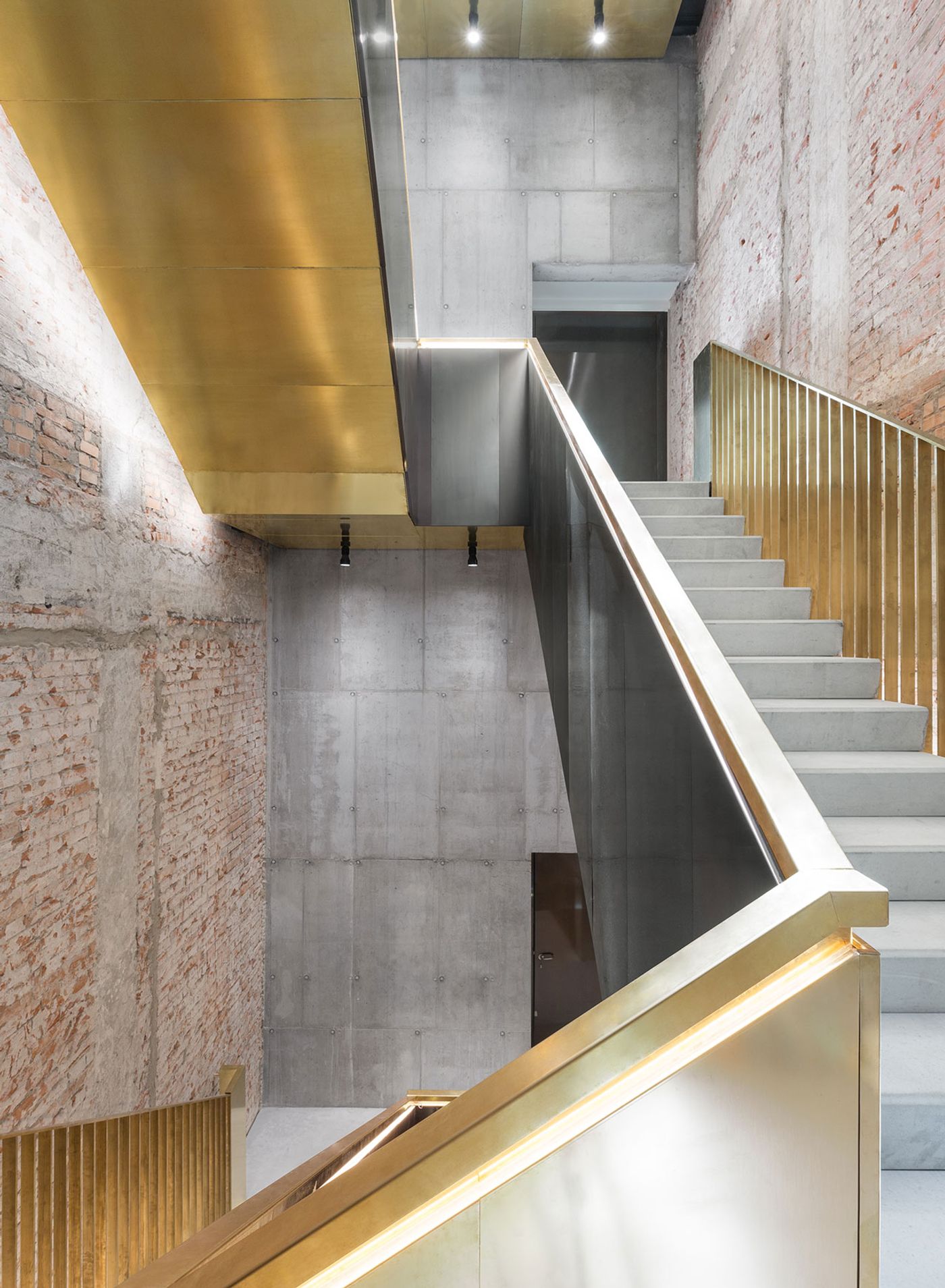
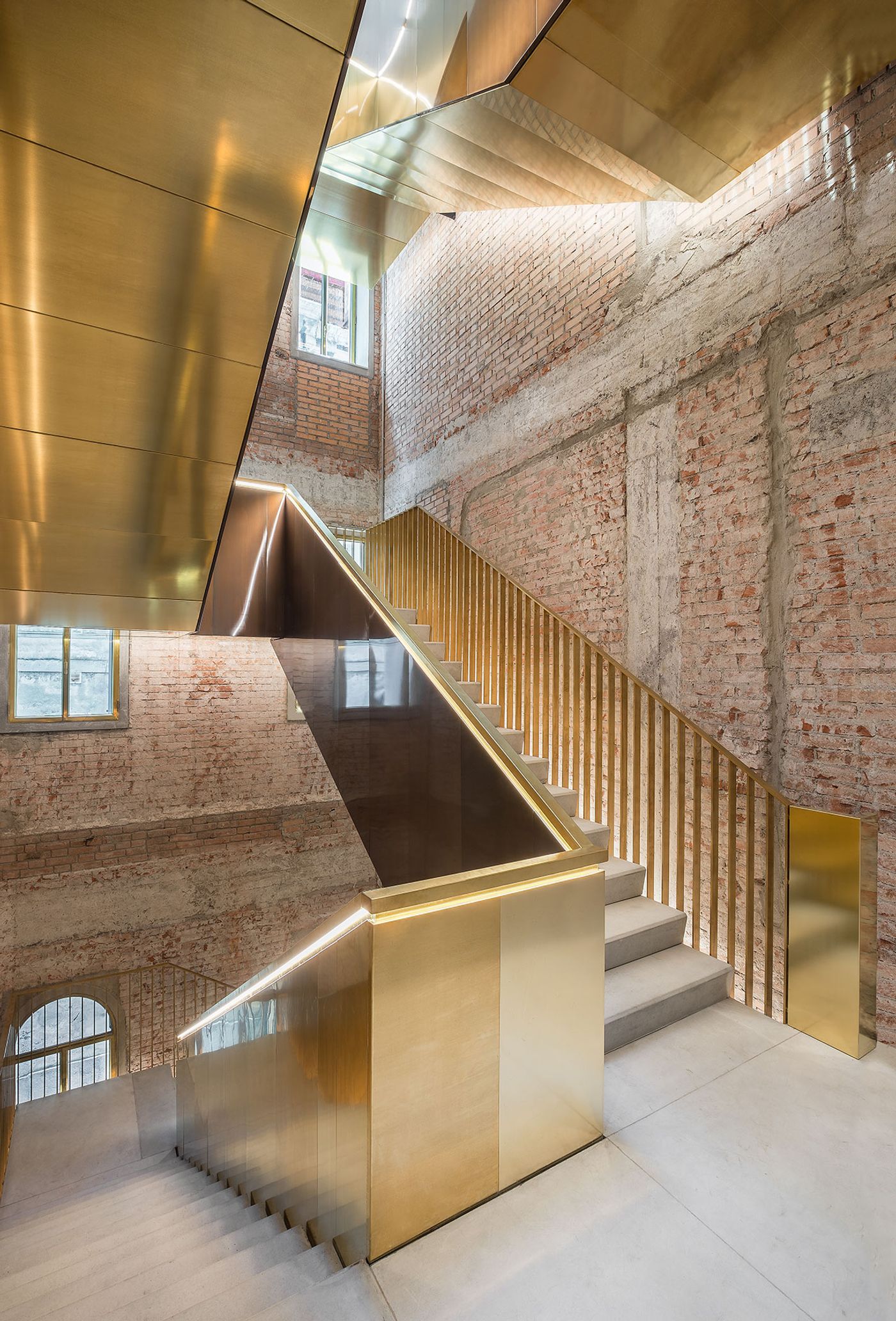
For the 19th edition of the Architecture Biennale, Fondazione Prada’s Ca’ Corner della Regina is hosting the exhibition “Diagrams,” designed by AMO/OMA.
The show explores how visual communication of data can shape understanding, meaning, and even manipulation. The materials span from the 7th century to today, creating a thematic map of contemporary urgencies and showing how these issues recur across time and place.
Venice remains a city where the old and the new are in constant conversation—and architects like Rem Koolhaas keep pushing that dialogue forward. We can only wonder what surprises this 19th Architecture Biennale will bring!